Over the course of our lives Claudia and I have made the drive along I-15 from northern to southern Utah many, many times—some of them before there even was an I-15. Most were a part of the regular trips to southern California when Grandma and Grandpa Lange still lived there. Nowadays a trip to California is more likely to be by airplane, particularly since there are just the two of us and not a whole carload of kids too.
In more recent years trips to southern Utah were exactly that: trips to southern Utah, for such things as visiting our daughter and hubby when they lived in Hurricane, or watching various of our children run in the St. George Marathon a couple different times, or more recently visiting my brother and his wife first in St. George and now in Hurricane.
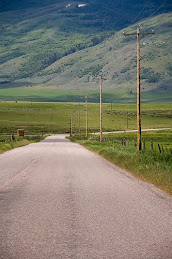
The past two days took us to southern Utah again, this time to the Bryce Canyon area, where our youngest daughter was running a half marathon. We left midday on Friday and headed south through the various familiar counties—Davis, Salt Lake, Utah, Juab, Millard, Beaver, Iron—that I-15 runs through. We took a short break at Scipio and continued on until we exited the freeway south of Beaver on Utah highway 20, which happens to be just twenty miles long as it heads east from I-15, through some mountains, and ends at U.S. 89 of the other side. A pleasant, scenic drive.
With the high price of gasoline (at now over $4.00 a gallon), I decided to employ some of the elements of hypermiling that our younger son uses so effectively to boost his gas mileage in his ten-year-old Saturn. I decided to drive only 65 miles per hour while still on the freeway, even after the speed limit increases to 75 south of Spanish Fork. Most cars were going faster, but I was surprised to encounter an occasional fellow traveler who was driving slower like we were.
Once we were on U.S. 89 we continued south to Panguitch. About seven miles south of there, we intersected with Utah highway 12, the route that runs toward Bryce Canyon. We turned east onto highway 12, and near the intersection of 89 and 12, perhaps a third or half a mile east of the intersection, we found our motel, Harold's Place Inn, and checked in. The entire drive from Bountiful to our motel had taken only four hours and fifteen minutes, including our brief stop in Scipio.
After we had made our original reservation at Harold's Place, my assistant at work (whose grandparents live in nearby Tropic) told me that there were many places much closer to Bryce Canyon and gave me a list of ten other motels to try. I called every single one of them, and none had vacancies for this particular weekend. That is not surprising, given that July has to be the normal height of the tourist season for the Bryce area, not to mention all the additional people in town for the half marathon.
We then drove the seventeen miles or so on to Bryce Canyon. The road goes through the very scenic Red Canyon, and we greatly enjoyed the drive, which incidentally only took us about fifteen minutes rather than the half hour my assistant had suggested.
Near Bryce Canyon we called Mary on her cell phone, and she directed us to where they were camping in the large campground just south of Ruby's Inn. She and Vince had driven down this morning to make sure they were early enough to find a suitable campsite before the campground filled up. There were two other couples staying with them. The husbands were friends that grew up with Vince.
After visiting a while, Claudia and I went to eat dinner at the Ruby's Inn restaurant. We had the cowboy buffet. The restaurant was very crowded, and we heard a lot of tourists speaking German, but the whole arrangement was very efficient, and we did not have to wait long to be seated. After we ate, we looked through the general store and some other little shops trying to find some balloons for the race Saturday morning, but apparently balloons don't sell well in such touristy places.
We returned to the campground, and Peter and Anna had also arrived, and we visited briefly with them before driving back to our motel. The drive through Red Canyon at dusk was also very pretty.
We watched the first episode of the new season of Monk on the TV in our motel room. It was followed by the first episode of Psych, but I fell asleep and did not see much of that.
The alarm on my cell phone went off at 5:00 Saturday morning, way too early for anyone to be up, except that we had to pack up our things, check out of the motel, and drive back through Red Canyon to Ruby's Inn for the 6:00 start of the half marathon. Mary was running with the wives of Vince's two friends. The elevation is above 7,000 feet, and it was downright cold at 6:00 in the morning. (On the drive between Red Canyon and Ruby's Inn we passed a sign saying "Summit 7,777 feet.")
We watched the race start, and then drove part way along the race route and parked to wait for the three girls to come by, and held out our signs that Claudia made many years ago when we watched Anna and Eliza run in the Lake Tahoe Marathon. It was in a gorgeous setting as we watched the sun come up and spread across the intricate red rock formations. We listened to a new Tabernacle Choir CD, "Called to Serve," that Claudia had given me before we left the motel as my birthday present. We were somewhere between miles 4 and 5 of the 13.1-mile course when Mary and her two friends passed.
When the traffic was allowed to continue in an eastbound direction along highway 12 (police officers alternatively piloted east- and then westbound traffic along the half of the road the runners were not using), we continued down through Tropic and beyond to Cannonville, where the finish line was. I say down because the elevation drop from the start to the finish of the race was some 2,000 feet. It's hard to image a marathon route with more breath-taking scenery than this one had.
We parked within a block of the finish line in Cannonville and waited for Mary to come in. Pete and Anna had joined us, and Vince and his two friends were there too.
After Mary finished the race, Mary and Vince, Peter and Anna, and Claudia and I went to breakfast at a restaurant back in Tropic. Pete and Anna treated Claudia and me for my birthday. We all had some sort of omelet, except Anna who had pancakes and scrambled eggs on the side. The service was exceedingly slow; it appeared they were severely understaffed. So it was late morning by the time we finished eating.
We drove Vince and Mary back to their campground, said our good-byes, and we headed for home, a final time through the beautiful Red Canyon, and back to Panguitch, where we stopped to fill the minivan with gas. Rather than travel back along the familiar I-15, we decided to stay on the more scenic (and for us different) U.S. 89. I was glad we did. This route took us through parts of Garfield, Piute, and Sevier counties.
Around Marysville (and just before the battery on my cell phone died) Camilla, Chris, and Sam called from Everett to wish me a happy birthday. Camilla had just returned herself from a week of training at the Great Harvest headquarters in Dillon, Montana. She finished Friday afternoon and drove to Spokane, where she stayed overnight, before waking up early Saturday morning and continuing on home to Everett.
We traveled north on U.S. 89, Claudia sleeping much of the way, until it merged with I-70 heading eastbound. We exited at Salina and continued northward on U.S. 50 until we came to Scipio and rejoined I-15 northbound.
And then on home, with a brief rest stop in Nephi, continuing at our 65 miles per hour. I was very tired by the time we reached home. Claudia felt it took us forever to drive just through Utah Valley.
Interestingly, our return trip from Panguitch to Bountiful took only four hours and five minutes. So, both routes—our more conventional I-15 and the more scenic combination of U.S. 89, I-70, and U.S. 50—were fairly comparable in terms of distance and time.
Saturday, July 19, 2008

Monday, June 30, 2008
Trip to California
On Friday evening, June 27, Grandpa Lange, Claudia, and I took a Southwest flight from Salt Lake City to Los Angeles. Paul, Eliza, and Peter kindly drove us to the airport.
Our flight arrived nearly a half hour early in Los Angeles, which was fortunate because it took us as long to drive from the airport to our destination in La Crescenta as it had taken to drive from our home in Bountiful and then fly to California. We had to catch the airport shuttle to the Alamo car rental place, pick up a rental car (and then pick up a second one because the plates on the first one expired in May), and then find the right freeway (which happened to be south on I-405, east on I-105, north on I-110 through downtown Los Angeles, north on I-5, north on California 2, and finally west on I-210). At that late hour we did not expect traffic to be so heavy, but it was nearly a parking lot at times as we approached downtown and just beyond.
We were spending the night with Janice's parents, Wally and Ann Anderson, who generously offer their home for us to stay in whenever we come down to visit David and Janice. We arrived there at 11:30 p.m. California time (or 12:30 our time), and Ann was dutifully waiting up for us so she could lock up the house after we were safely in.
The purpose for our weekend trip was to celebrate Stuart's return after two years as a missionary in the Illinois Peoria Mission. He had arrived home on Thursday of the week before, the same day his younger sister Rachel graduated from high school. The next day David and Janice took Stuart through a session in the Los Angeles Temple and then David and Stuart went surfing.
We spent much of Saturday visiting first with Wally and Ann, who kindly fixed us breakfast, and then much of the rest of the day with David and Janice and their family. Tony and Jessica came up from San Diego, where they live with their two boys (Tanner and Ben) about two hours south of David and Janice. Adam and Joanna were there from Glendale, Arizona, a five-to-six-hour drive away, with their little two-year-old Kate. They are expecting their second child, a boy, sometime in August. Drew and Erica live nearby in La Crescenta, perhaps ten minutes away, and they are expecting their first child in early December. Stuart and Rachel will both be going to BYU this fall, and Heather, Brooke, and Annee are still at home.
On Sunday morning we attended church in the Verdugo Hills Ward and heard Stuart report his mission in sacrament meeting. He did a fine job. Just before he spoke, Jessica and Rachel sang "Come, Thou Fount of Every Blessing," one of my favorite hymns.
We spent the rest of Sunday, after the three-hour block of meetings, visiting with David, Janice, and their family. When David, Janice, Stuart, and Rachel left to go to another sacrament meeting, we drove back up to Ann and Wally's to take a nap but ended up helping them set up for the family dinner that was scheduled for four o'clock. It was a delightfully pleasant day, a little too warm if you had to be out in the sun for any period of time, just right if you were in the shade. It was good to see some of Janice's side of the family again.
In the evening the crowds faded away, and we visited some more with Wally and Ann and a little later with David and Janice, who came back over to the Andersons' house for some final visiting and farewells.
David is going through a tough time right now. He has been unemployed for the past five weeks and has now lived through the month's severance pay he received when he was let go. He has a lot of feelers out, and a couple of leads, but nothing concrete yet in the troubled times that the construction sector is now going through in California. Many days look bleak. In addition to looking for work, he plans to spend the coming months sprucing up his home in the event he needs to relocate. If he can actually sell it in a slow market, he thinks it is probably worth something approaching three-quarters of a million dollars. Incredible.
We went to bed a little earlier so we could wake up before four o'clock Monday morning to drive back to the airport, return the rental car, and catch our 6:30 flight home to Utah. When we got in the lengthy line of passengers trying to make their way through the security checks, we wondered if we would actually catch our plane, but we did. (Interestingly, my newly implanted heart monitor set off the machines in Salt Lake as we were leaving there Friday evening, but it did not cause any beeping this morning as I went through security in Los Angeles.)
Shauna and the three youngest of her six children (Andrew, Ethan, and Marta) picked us up at the airport after we arrived in Salt Lake. It had been a quick but delightful reunion with Claudia's side of the family.
Our flight arrived nearly a half hour early in Los Angeles, which was fortunate because it took us as long to drive from the airport to our destination in La Crescenta as it had taken to drive from our home in Bountiful and then fly to California. We had to catch the airport shuttle to the Alamo car rental place, pick up a rental car (and then pick up a second one because the plates on the first one expired in May), and then find the right freeway (which happened to be south on I-405, east on I-105, north on I-110 through downtown Los Angeles, north on I-5, north on California 2, and finally west on I-210). At that late hour we did not expect traffic to be so heavy, but it was nearly a parking lot at times as we approached downtown and just beyond.
We were spending the night with Janice's parents, Wally and Ann Anderson, who generously offer their home for us to stay in whenever we come down to visit David and Janice. We arrived there at 11:30 p.m. California time (or 12:30 our time), and Ann was dutifully waiting up for us so she could lock up the house after we were safely in.
The purpose for our weekend trip was to celebrate Stuart's return after two years as a missionary in the Illinois Peoria Mission. He had arrived home on Thursday of the week before, the same day his younger sister Rachel graduated from high school. The next day David and Janice took Stuart through a session in the Los Angeles Temple and then David and Stuart went surfing.
We spent much of Saturday visiting first with Wally and Ann, who kindly fixed us breakfast, and then much of the rest of the day with David and Janice and their family. Tony and Jessica came up from San Diego, where they live with their two boys (Tanner and Ben) about two hours south of David and Janice. Adam and Joanna were there from Glendale, Arizona, a five-to-six-hour drive away, with their little two-year-old Kate. They are expecting their second child, a boy, sometime in August. Drew and Erica live nearby in La Crescenta, perhaps ten minutes away, and they are expecting their first child in early December. Stuart and Rachel will both be going to BYU this fall, and Heather, Brooke, and Annee are still at home.
On Sunday morning we attended church in the Verdugo Hills Ward and heard Stuart report his mission in sacrament meeting. He did a fine job. Just before he spoke, Jessica and Rachel sang "Come, Thou Fount of Every Blessing," one of my favorite hymns.
We spent the rest of Sunday, after the three-hour block of meetings, visiting with David, Janice, and their family. When David, Janice, Stuart, and Rachel left to go to another sacrament meeting, we drove back up to Ann and Wally's to take a nap but ended up helping them set up for the family dinner that was scheduled for four o'clock. It was a delightfully pleasant day, a little too warm if you had to be out in the sun for any period of time, just right if you were in the shade. It was good to see some of Janice's side of the family again.
In the evening the crowds faded away, and we visited some more with Wally and Ann and a little later with David and Janice, who came back over to the Andersons' house for some final visiting and farewells.
David is going through a tough time right now. He has been unemployed for the past five weeks and has now lived through the month's severance pay he received when he was let go. He has a lot of feelers out, and a couple of leads, but nothing concrete yet in the troubled times that the construction sector is now going through in California. Many days look bleak. In addition to looking for work, he plans to spend the coming months sprucing up his home in the event he needs to relocate. If he can actually sell it in a slow market, he thinks it is probably worth something approaching three-quarters of a million dollars. Incredible.
We went to bed a little earlier so we could wake up before four o'clock Monday morning to drive back to the airport, return the rental car, and catch our 6:30 flight home to Utah. When we got in the lengthy line of passengers trying to make their way through the security checks, we wondered if we would actually catch our plane, but we did. (Interestingly, my newly implanted heart monitor set off the machines in Salt Lake as we were leaving there Friday evening, but it did not cause any beeping this morning as I went through security in Los Angeles.)
Shauna and the three youngest of her six children (Andrew, Ethan, and Marta) picked us up at the airport after we arrived in Salt Lake. It had been a quick but delightful reunion with Claudia's side of the family.
Saturday, June 21, 2008
And the verdict is . . .
I guess for the record I should mention what's been happening lately. Thursday morning, a little more than an hour after I arrived at work, I started feeling very sick, starting first with nausea, then feeling light-headed, weak, sweaty, disoriented. I had the thought that I might pass out, so I actually sat on the floor of my office so that when I toppled over I wouldn't have as far to go.
I had the presence of mind to activate the heart monitor that had been implanted in my chest two weeks earlier.
This is stupid, I thought, so I got up from off the floor and called in my assistant and told her I did not feel well. She could tell I did not. I was probably pale at the time and disoriented. She wanted to know if I wanted to go down to the nurse's station, but I said I didn't think I could make it. So she called down, and within seconds it seemed the nurse arrived with a wheelchair. I can remember getting in the wheelchair, being pushed to the elevator, and getting on the elevator, but not much after that.
The next thing I remember was lying on a cot in the nurse's station with paramedics working all around me, asking questions, taking blood pressure, poking, proding. I remember hearing the nurse tell them that I was unresponsive for a while although my eyes were open. So I do not know if that means I actually passed out or not.
The paramedics wheeled me out to an ambulance in front of the Church Office Building. I was amazed that in addition to the ambulance there were also two fire engines there. That seemed an extravagant bit of overkill. It was the first time in my life I had ever ridden in an ambulance, and as they took me up to LDS Hospital it seemed to be an awfully bumpy ride. They had me eat a glucose stick on the way up and inserted an IV line into my left hand. Once in the emergency room, I was asked a lot of questions again (just as I had been in the nurse's station back at work and in the ambulance on the way to the hospital), and was hooked up to various medical devices and had a chest X-ray taken and such procedures.
My work had kindly called Claudia and told her I was being transported up to LDS Hospital, so she arrived at some point. Eliza starting spreading the word to other family members.
At some point a man came from Medtronic (he said he had been up in Ogden when they called him) to interrogate my heart monitor (I had naively assumed that they just read it, but no, they interrogate it). Apparently it served its function because it showed no unusual heart activity during the whole episode. That is good news.
My blood sugar level, even after eating the glucose in the ambulance, was only 48 after I arrived at the hospital. The normal range for a non-diabetic, I discovered from subsequent research on the Internet, is between 70 and 120. I had had a severe case of hypoglycemia, which is apparently unusual for someone who is not also diabetic.
Also, my white blood cell count was extremely elevated, something like 21,000, which the ER doctor said could be caused by one of three things (although afterward Claudia and I could only remember two of them): a response to the trauma my body had just been through, a serious infection going on in my body, or something else. I told the doctor I had had a cold and sore throat for the past week, but he said that would not be sufficient to account for such a high level.
Talmage came from work to join us just moments before they were going to release me to go home, which was about five or six hours after the whole ordeal started. When we exited the ER, Rebecca, Louise, Meghan, and Mimi were also there in the waiting room. Louise, who had come with Rebecca from Layton, kindly drove Claudia and me home. Talmage came to our house to pick her up, but they stayed the rest of the afternoon visiting. Louise fixed us lunch and called my primary care doctor to make an appointment for Friday afternoon and was generally a great help.
I was feeling pretty worn out and tired and just rested much of the rest of the day. I was also having chills even though everyone else thought it was a warm day.
What I had just been through reminded me of how I felt on the second day of our North Dakota trip when I got so sick as we were driving across eastern Montana (see journal entry for Thursday, May 15). I must have been experiencing hypoglycemia that morning also. And in much milder forms several other times in the past couple of months when I have felt light-headed.
Friday morning I had a follow-up visit with my regular cardiologist that had already been scheduled for some time. He said that one of the heart medications I have been taking, Metoprolol tartrate, could cause my blood sugar level to be low and told me to discontinue it.
Friday afternoon I went to see my primary care doctor, but his receptionist had no record that I even had an appointment (even though they had told us just the day before to come at 1:40 Friday afternoon). We did talk her into having the doctor review the record from what happened at the hospital yesterday. He did and ordered a lab test, after which I had a shot of something, and then had to come back an hour later and have another blood test. My appointment with him will now be next Thursday afternoon.
In addition to the hypoglycemia episode, I have had a fever and chills and an unsettled stomach and continued to pretty much rest most of the day Friday. We were planning to go to Hyrum early this morning, up in Cache Valley, to watch Anna participate in a triathlon, but I called her this evening and said we had decided not to come. She thought that made sense. My boss had called me from work Friday morning and said not to worry about the mission presidents' seminar that begins Sunday morning, if I didn't feel up to coming. I'll play that one by ear still.
I had the presence of mind to activate the heart monitor that had been implanted in my chest two weeks earlier.
This is stupid, I thought, so I got up from off the floor and called in my assistant and told her I did not feel well. She could tell I did not. I was probably pale at the time and disoriented. She wanted to know if I wanted to go down to the nurse's station, but I said I didn't think I could make it. So she called down, and within seconds it seemed the nurse arrived with a wheelchair. I can remember getting in the wheelchair, being pushed to the elevator, and getting on the elevator, but not much after that.
The next thing I remember was lying on a cot in the nurse's station with paramedics working all around me, asking questions, taking blood pressure, poking, proding. I remember hearing the nurse tell them that I was unresponsive for a while although my eyes were open. So I do not know if that means I actually passed out or not.
The paramedics wheeled me out to an ambulance in front of the Church Office Building. I was amazed that in addition to the ambulance there were also two fire engines there. That seemed an extravagant bit of overkill. It was the first time in my life I had ever ridden in an ambulance, and as they took me up to LDS Hospital it seemed to be an awfully bumpy ride. They had me eat a glucose stick on the way up and inserted an IV line into my left hand. Once in the emergency room, I was asked a lot of questions again (just as I had been in the nurse's station back at work and in the ambulance on the way to the hospital), and was hooked up to various medical devices and had a chest X-ray taken and such procedures.
My work had kindly called Claudia and told her I was being transported up to LDS Hospital, so she arrived at some point. Eliza starting spreading the word to other family members.
At some point a man came from Medtronic (he said he had been up in Ogden when they called him) to interrogate my heart monitor (I had naively assumed that they just read it, but no, they interrogate it). Apparently it served its function because it showed no unusual heart activity during the whole episode. That is good news.
My blood sugar level, even after eating the glucose in the ambulance, was only 48 after I arrived at the hospital. The normal range for a non-diabetic, I discovered from subsequent research on the Internet, is between 70 and 120. I had had a severe case of hypoglycemia, which is apparently unusual for someone who is not also diabetic.
Also, my white blood cell count was extremely elevated, something like 21,000, which the ER doctor said could be caused by one of three things (although afterward Claudia and I could only remember two of them): a response to the trauma my body had just been through, a serious infection going on in my body, or something else. I told the doctor I had had a cold and sore throat for the past week, but he said that would not be sufficient to account for such a high level.
Talmage came from work to join us just moments before they were going to release me to go home, which was about five or six hours after the whole ordeal started. When we exited the ER, Rebecca, Louise, Meghan, and Mimi were also there in the waiting room. Louise, who had come with Rebecca from Layton, kindly drove Claudia and me home. Talmage came to our house to pick her up, but they stayed the rest of the afternoon visiting. Louise fixed us lunch and called my primary care doctor to make an appointment for Friday afternoon and was generally a great help.
I was feeling pretty worn out and tired and just rested much of the rest of the day. I was also having chills even though everyone else thought it was a warm day.
What I had just been through reminded me of how I felt on the second day of our North Dakota trip when I got so sick as we were driving across eastern Montana (see journal entry for Thursday, May 15). I must have been experiencing hypoglycemia that morning also. And in much milder forms several other times in the past couple of months when I have felt light-headed.
Friday morning I had a follow-up visit with my regular cardiologist that had already been scheduled for some time. He said that one of the heart medications I have been taking, Metoprolol tartrate, could cause my blood sugar level to be low and told me to discontinue it.
Friday afternoon I went to see my primary care doctor, but his receptionist had no record that I even had an appointment (even though they had told us just the day before to come at 1:40 Friday afternoon). We did talk her into having the doctor review the record from what happened at the hospital yesterday. He did and ordered a lab test, after which I had a shot of something, and then had to come back an hour later and have another blood test. My appointment with him will now be next Thursday afternoon.
In addition to the hypoglycemia episode, I have had a fever and chills and an unsettled stomach and continued to pretty much rest most of the day Friday. We were planning to go to Hyrum early this morning, up in Cache Valley, to watch Anna participate in a triathlon, but I called her this evening and said we had decided not to come. She thought that made sense. My boss had called me from work Friday morning and said not to worry about the mission presidents' seminar that begins Sunday morning, if I didn't feel up to coming. I'll play that one by ear still.
Sunday, June 15, 2008
The day freedom died
This afternoon I finished reading of a disturbing chapter from our nation's troubled history following the Civil War in a well written, engaging book by Charles Lane entitled The Day Freedom Died: The Colfax Massacre, the Supreme Court, and the Betrayal of Reconstruction. The summary on the inside leaves of the book's cover gives a fair summary of what the book was about (interspersed with my own comments prompted by that summary):
Much has been said and written in our own time about the impasse between modern-day Republicans and Democrats, together with a resulting lack of any leadership in confronting the problems that beset us, because of the partisan nature of today's politics. Today's wrangling between the two parties seems mild when compared to the warfare that raged between them in the decade or so following the Civil War.
History thus provides a sense of perspective and balance in understanding and interpreting the events of our own day.
Like the author, I had never heard of the events of that long-ago Easter Sunday in Colfax, Louisiana, and the resulting constitutional issues and political fallout that concerned the country at that time, until I read this book. I would heartily recommend it to any serious student of American history.
The pervasive fraud and rampant violence associated with elections in Louisiana (and indeed in much of the South) during this period makes our little hiccup with the 2000 George Bush election, ultimately decided by the U.S. Supreme Court over irregularities in Florida, seem pale in comparison.
In many respects, we have come a long way since the difficult days of Reconstruction and its aftermath. We now have a black candidate of a major American political party—ironically the Democrats, which in that distant day was the party of white supremacists—running for the presidency of our country. I liked the concluding paragraph in Bret Schulte's editorial in this week's issue of U.S. News & World Report:
"As much as the Obama campaign trafficked in hope, the racial undercurrent is enough to make many Americans despair, regardless of political stripe. Still, most Americans are proud to live in a country that gave a self-proclaimed skinny kid with a funny name and few advantages the chance to be president. Whether or not Obama is the best candidate for the job is up to voters, who have plenty of issues to weigh. It's too bad that some voters have decided that race is one of them" (U.S. News & World Report, June 16, 2008, "One Week," 10).
I personally think there are a lot of issues against Senator Barak Obama's becoming our next president, but I do not think race should be one of them. By now we should have outgrown that.
"America after the Civil War was a land of shattered promises and entrenched hatreds. In the explosive South, danger took many forms: white extremists loyal to a defeated world terrorized former slaves, while in the halls of government, bitter and byzantine political warfare raged between Republicans and Democrats."
Much has been said and written in our own time about the impasse between modern-day Republicans and Democrats, together with a resulting lack of any leadership in confronting the problems that beset us, because of the partisan nature of today's politics. Today's wrangling between the two parties seems mild when compared to the warfare that raged between them in the decade or so following the Civil War.
History thus provides a sense of perspective and balance in understanding and interpreting the events of our own day.
"In The Day Freedom Died, Charles Lane draws us vividly into this war-torn world with a true story whose larger dimensions have never been fully explored. Here is the epic tale of the Colfax Massacre, the mass murder of more than sixty black men on Easter Sunday 1873 that propelled a small Louisiana town into the center of the nation's consciousness. As the smoke cleared, the perpetrators created a falsified version of events to justify their crimes. But a tenacious northern-born lawyer rejected the lies. Convinced that the Colfax murderers must be punished lest the suffering of the Civil War be in vain, U.S. Attorney James Beckwith of New Orleans pursued the killers despite death threats and bureaucratic intrigue—until the final showdown at the Supreme Court of the United States. The ruling that decided the case influenced race relations in the United States for decades."
Like the author, I had never heard of the events of that long-ago Easter Sunday in Colfax, Louisiana, and the resulting constitutional issues and political fallout that concerned the country at that time, until I read this book. I would heartily recommend it to any serious student of American history.
"An electrifying piece of historical detective work, The Day Freedom Died brings to life a gallary of memorable characters in addition to Beckwith: Willey Calhoun, the iconoclastic Southerner who dreamed of building a bastion of equal rights on his Louisiana plantation; Christopher Columbus Nash, the white supremacist avenger who organized the Colfax Massacre; William Ward, the black Union Army veteran who took up arms against white terrorists; Ulysses S. Grant, the well-intentioned but beleaguered president; and Joseph P. Bradley, the brilliant justice of the Supreme Court whose political and legal calculations would shape the drama's troubling final act."
The pervasive fraud and rampant violence associated with elections in Louisiana (and indeed in much of the South) during this period makes our little hiccup with the 2000 George Bush election, ultimately decided by the U.S. Supreme Court over irregularities in Florida, seem pale in comparison.
In many respects, we have come a long way since the difficult days of Reconstruction and its aftermath. We now have a black candidate of a major American political party—ironically the Democrats, which in that distant day was the party of white supremacists—running for the presidency of our country. I liked the concluding paragraph in Bret Schulte's editorial in this week's issue of U.S. News & World Report:
"As much as the Obama campaign trafficked in hope, the racial undercurrent is enough to make many Americans despair, regardless of political stripe. Still, most Americans are proud to live in a country that gave a self-proclaimed skinny kid with a funny name and few advantages the chance to be president. Whether or not Obama is the best candidate for the job is up to voters, who have plenty of issues to weigh. It's too bad that some voters have decided that race is one of them" (U.S. News & World Report, June 16, 2008, "One Week," 10).
I personally think there are a lot of issues against Senator Barak Obama's becoming our next president, but I do not think race should be one of them. By now we should have outgrown that.
Saturday, June 07, 2008
A thirtieth anniversary
There are moments in life so infused with emotion—whether of shock or grief or fear on the one hand or of surprise or excitement or joy on the other hand—that forever enshrines the events and feelings of the day into our memories for the rest of our lives. The death of a loved one or the birth of a child can be such a moment for an individual or a family.
Sometimes such moments are spread across whole populations and cultures, such as the day John F. Kennedy was assassinated or the day the space shuttle Challenger exploded or the morning America was attacked on multiple fronts on 9-11. Each of these was a horrific event, and if you were alive at the time and were old enough to know what was going on, you can clearly remember where you were and what you were doing when you heard the news unfolding.
A particularly joyous event in the lives of Latter-day Saints across the world occurred exactly thirty years ago tomorrow when President Spencer W. Kimball (1895-1985), the twelfth president and prophet of The Church of Jesus Christ of Latter-day Saints, announced on June 8, 1978, that God had revealed that "the long-promised day has come when every faithful, worthy man in the Church may receive the holy priesthood, with power to exercise its divine authority, and enjoy with his loved ones every blessing that flows therefrom, including the blessings of the temple" and that "all worthy male members of the Church may be ordained to the priesthood without regard for race or color" (First Presidency letter dated June 8, 1978; now canonized as scripture in the Doctrine and Covenants as Official Declaration 2).
There were undoubtedly those who refused to accept the revelation as the mind and will of the Lord, just as had occurred eighty-eight years earlier when President Wilford Woodruff (1807-1898), the fourth president and prophet of the Church, had announced in 1890 that God had revealed that the Latter-day Saints were no longer required to live the law of plural marriage and were from that time forward specifically prohibited from entering into plural marriages (see Official Declaration 1 in the Doctrine and Covenants).
In both instances—with President Woodruff's announcement in 1890 and with President Kimball's announcement in 1978—the vast majority of devoted, faithful Latter-day Saints accepted these major shifts in practice as being the mind and voice and will of the Lord to His people.
My own experience on that June morning thirty years ago, captured in a joyous letter I wrote the following morning [Saturday, June 10, 1978] to my extended family and others, I think reflects the spirit in which most Latter-day Saints at the time greeted the announcement:
Sometimes such moments are spread across whole populations and cultures, such as the day John F. Kennedy was assassinated or the day the space shuttle Challenger exploded or the morning America was attacked on multiple fronts on 9-11. Each of these was a horrific event, and if you were alive at the time and were old enough to know what was going on, you can clearly remember where you were and what you were doing when you heard the news unfolding.
A particularly joyous event in the lives of Latter-day Saints across the world occurred exactly thirty years ago tomorrow when President Spencer W. Kimball (1895-1985), the twelfth
 president and prophet of The Church of Jesus Christ of Latter-day Saints, announced on June 8, 1978, that God had revealed that "the long-promised day has come when every faithful, worthy man in the Church may receive the holy priesthood, with power to exercise its divine authority, and enjoy with his loved ones every blessing that flows therefrom, including the blessings of the temple" and that "all worthy male members of the Church may be ordained to the priesthood without regard for race or color" (First Presidency letter dated June 8, 1978; now canonized as scripture in the Doctrine and Covenants as Official Declaration 2).
There were undoubtedly those who refused to accept the revelation as the mind and will of the Lord, just as had occurred eighty-eight years earlier when President Wilford Woodruff (1807-1898), the fourth president and prophet of the Church, had announced in 1890 that God had revealed that the Latter-day Saints were no longer required to live the law of plural marriage and were from that time forward specifically prohibited from entering into plural marriages (see Official Declaration 1 in the Doctrine and Covenants).
In both instances—with President Woodruff's announcement in 1890 and with President Kimball's announcement in 1978—the vast majority of devoted, faithful Latter-day Saints accepted these major shifts in practice as being the mind and voice and will of the Lord to His people.
My own experience on that June morning thirty years ago, captured in a joyous letter I wrote the following morning [Saturday, June 10, 1978] to my extended family and others, I think reflects the spirit in which most Latter-day Saints at the time greeted the announcement:
On Friday morning, June 9, 1978, all of the General Authorities of the Church who reside at Church headquarters were called to an early morning meeting in the Salt Lake Temple. They had been asked to come fasting and praying. In a manner most solemn and sacred, the statement of the First Presidency was read:
“To All General and Local Priesthood Officers of The Church of Jesus Christ of Latter-day Saints throughout the World
“Dear Brethren:
“As we have witnessed the expansion of the work of the Lord over the earth, we have been grateful that people of many nations have responded to the message of the restored gospel, and have joined the Church in ever-increasing numbers. This, in turn, has inspired us with a desire to extend to every worthy member of the Church all of the privileges and blessings which the gospel affords.
“Aware of the promises made by the prophets and presidents of the Church who have preceded us that at some time, in God’s eternal plan, all of our brethren who are worthy may receive the priesthood, and witnessing the faithfulness of those from whom the priesthood has been withheld, we have pleaded long and earnestly in behalf of these, our faithful brethren, spending many hours in the Upper Room of the Temple supplicating the Lord for divine guidance.
“He has heard our prayers, and by revelation has confirmed that the long-promised day has come when every faithful, worthy man in the Church may receive the holy priesthood, with power to exercise its divine authority, and enjoy with his loved ones every blessing that flows therefrom, including the blessings of the temple. Accordingly, all worthy male members of the Church may be ordained to the priesthood without regard for race or color. Priesthood leaders are instructed to follow the policy of carefully interviewing all candidates for ordination to either the Aaronic or the Melchizedek Priesthood to insure that they meet the established standards for worthiness.
“We declare with soberness that the Lord has now made known His will for the blessing of all His children throughout the earth who will hearken to the voice of His authorized servants, and prepare themselves to receive every blessing of the gospel.
“Sincerely yours,
“Spencer W. Kimball, N. Eldon Tanner, and Marion G. Romney”
President Kimball then responded, bearing his sweet and fervent testimony that the Lord had heard and answered by revelation his oft and fervent pleadings. Each General Authority present then had an opportunity to bear his testimony and share his feelings of joy and thanksgiving.
“Never have I felt the Spirit of the Lord more strongly,” commented one of the Brethren to me later that day, “than I did this morning in that temple meeting.”
Shortly after that historic meeting, Elder Carlos E. Asay and Rex D. Pinegar called together all of the staff of the Missionary Department, where I have the privilege of working, to make the announcement to us. As Elder Asay read the statement, my eyes filled with tears, my heart swelled with joy, and I felt like standing and shouting “Praise the Lord.” My reaction was not unique. The Spirit of the Lord was strongly present, and many in the room wept openly—as I was doing—and were thrilled beyond all description at this monumental step forward.
Both Elder Asay and Elder Pinegar bore their testimonies and let us know in no uncertain terms that this was indeed a revelation from Almighty God. The Spirit confirmed their witness and riveted it into our souls. This was truth; it was so right; the Lord had spoken; the heavens had been opened.
Elder Pinegar opened the meeting for others to respond, and three or four of us bore our testimonies. I had that sacred opportunity, and only once before in my life during the bearing of my own testimony have I cried.
I recounted how I had served my mission in northern Brazil, where a large part of the population had the Negro lineage. The last city I worked in had an estimated 70 to 90 percent of its population who were black. Oh, how I grew to love those dear, humble people. They were warm, eager, and receptive. But their day and season had not yet arrived.
In Brazil there are many fine black members in the Church, many of them strong and faithful despite the restrictions they may not have understood but nevertheless accepted, grateful for those blessings of the gospel they were able to enjoy, and hoping for the day that has now arrived when the blessings of the priesthood would be theirs.
I recall specifically one dear, humble family in Petrópolis, just out of Rio de Janeiro. They were poor even by Brazilian standards. They lived in a tiny house with a dirt floor and no electricity. But they were solid people, and they taught a young elder from North America what happiness was. The husband, who held the priesthood, was a counselor in the branch presidency. His wife and consequently the children were of Negro lineage. For eight or nine years the family had faithfully attended meetings before the elders would baptize them. And now to think that in only a few months when the São Paulo Temple is dedicated they will be able to go there and all be sealed together forever as a family.
Oh, how I wish I were in Brazil today!
Yesterday’s announcement was historic. In my mind it far surpasses in significance the Manifesto issued by President Wilford Woodruff in 1890. It perhaps even surpasses the revelation that came to Peter anciently when he was directed to begin taking the gospel to the gentiles (see Acts 10:1–11:18). This new revelation issued by President Kimball this week canceled what has been in effect through six long millennia since the days of Cain. It fulfills the promises and prophecies of various prophets that that day would come. We have witnessed prophecy fulfilled, and I would hope each of us would be wise enough to record the historic event in our journals and diaries.
Two things came across to me yesterday, among other things. First, President Kimball is a kind and loving man, filled with great concern for all of God’s children. He had struggled long and pled much with the Lord before this revelation came. The very tone of the First Presidency’s letter bears this out. Second, President Kimball is a courageous man. It is one thing to hear the voice of the Lord, but it is another to have the courage to carry it out.
This action did not come about, as some have already erroneously supposed, because of outside pressures brought to bear against the Church. It has come partly because we have a prophet who in the fulness of his near perfection is filled with charity, the pure love of Christ, and who paid the price to bring it about, prevailing upon the heavens with his giant Enoch-like faith. And it has come because in the economy of heaven and in the wisdom, justice, and mercy of an all-knowing and all-loving God the time was right for the full blessings of the gospel to be extended to all people everywhere “who will hearken to the voice of His authorized servants, and prepare them-selves to receive every blessing of the gospel.”
What the Lord said specifically of the Prophet Joseph Smith seems to apply so very well to President Spencer W. Kimball:
“Wherefore, meaning the church, thou shalt give heed unto all his words and commandments which he shall give unto you as he receiveth them, walking in all holiness before me;
“For his word ye shall receive, as if from mine own mouth, in all patience and faith . . . .
“For thus saith the Lord God: Him have I inspired to move the cause of Zion in mighty power for good, and his diligence I know, and his prayers I have heard” (D&C 21:4–5, 7).
How fully that fits President Kimball and how appropriate to what has just happened this week!
The First Presidency’s statement does not contain the phrase “thus saith the Lord,” but it says it. They did say, “He has heard our prayers, and by revelation has confirmed that the long-promised day has come.” They did say, “We declare with soberness that the Lord has now made known His will for the blessing of all His children.”
I add my own humble testimony. God lives—of that there is no doubt. He has restored His priesthood in our day—of that there is no doubt. We have a mighty prophet in modern Israel—of that there is no doubt. The Spirit has borne powerful witness to my soul that this move to extend the priesthood to those who were formerly restricted is in fact a revelation from God. It is true. I know it as I know anything, and I declare that to you in the name of Jesus Christ, whose priesthood it is. Amen.
Friday, June 06, 2008
A season of good-byes
This morning we learned that my Aunt Donna died yesterday. She was the last living child of my father's parents, and thus an era ends, and that generation of our family is now gone. Donna was my dad's youngest sister and was one of my favorite aunts. And she was, as Claudia put it, the keeper of the family stories. She will be missed.
And then this evening all our own family—all 32 of us—were together for a formal family picture. We gathered at our house afterward for pizza and ice cream and cookies and snow cones (Caleb bought his own snow cone machine with his birthday money and was making snow cones for any who wanted them).
It may be the last time we will all be together at one time in one place for a very long time. Chris, Camilla, and Sam leave early tomorrow morning for Washington state. They stayed their final night in Utah at Chris's parents' house, since Chris's mom and dad are driving up to Everett with them. So it was pretty tearful when they left our house. They will be back down in mid-August for Chris's sister's wedding, but by then Paul, Eliza, and Peter will have moved to Atlanta.
I told Camilla, as she was parting, I didn't look at it like I was losing a daughter but gaining an excuse for a road trip.
And then this evening all our own family—all 32 of us—were together for a formal family picture. We gathered at our house afterward for pizza and ice cream and cookies and snow cones (Caleb bought his own snow cone machine with his birthday money and was making snow cones for any who wanted them).
It may be the last time we will all be together at one time in one place for a very long time. Chris, Camilla, and Sam leave early tomorrow morning for Washington state. They stayed their final night in Utah at Chris's parents' house, since Chris's mom and dad are driving up to Everett with them. So it was pretty tearful when they left our house. They will be back down in mid-August for Chris's sister's wedding, but by then Paul, Eliza, and Peter will have moved to Atlanta.
I told Camilla, as she was parting, I didn't look at it like I was losing a daughter but gaining an excuse for a road trip.
Thursday, June 05, 2008
More on the journey of discovery
I survived yesterday's cardiac electrophysiology study at Salt Lake Regional Medical Center. Apparently there was not enough evidence to require a pacemaker be installed, but I did have an under-the-skin heart monitor installed that's good for two or three years or until some other intervention requires. I guess I will beep now when I go through airport security screenings.
The incision on my upper left chest, just a little below the collarbone, where they inserted the heart monitor, is very tender today.
The incision on my upper left chest, just a little below the collarbone, where they inserted the heart monitor, is very tender today.
Saturday, May 31, 2008
The continuing journey
I am still working with my primary care doctor and the cardiologists to try to determine what, if anything, is going on with my heart these days. We are pretty certain I have one. It is an ongoing journey of discovery.
Yesterday morning I went to LDS Hospital and had an ultrasound on the carotid arteries in my neck. I will not know the result of the carotid artery study until probably sometime next week, although I did ask the technician who did it what it looked like. He said he was not a doctor and could not really tell me, but he did show me the images and pointed out where it appears there is some plaque built up along the artery walls, more so in the artery on the left side than the right.
Next Wednesday, June 4, I am scheduled to have a cardiac electrophysiological study (ESP) done at Salt Lake Regional Medical Center. That is something similar to the angiogram I had nearly two months ago, but rather than checking out the plumbing of my heart they will be checking on the electrical functions. The procedure is similar in that in both types they go to the heart through an insertion in the groin area. I will be in the hospital much of Wednesday and, if they end up putting in a pacemaker or defribillator or long-term under-the-skin monitor, I will stay overnight. That is the likely scenario.
Someone from the billing office there called me a couple days ago and wanted me to pay upfront my 10 percent of the cost of the ESP procedure. My portion? $1,378. I commented that $13,780 seemed awfully expensive, and she replied that if I go ahead and have the pacemaker put in, which is a likely outcome of the procedure, that will cost another $150,000-something. Wow! And I had been flabergasted that the angiogram I had done at the new Intermountain Medical Center on April 3 had cost more than $5,000 just for the hospital's portion, not counting what the doctor charged.
Yesterday morning I went to LDS Hospital and had an ultrasound on the carotid arteries in my neck. I will not know the result of the carotid artery study until probably sometime next week, although I did ask the technician who did it what it looked like. He said he was not a doctor and could not really tell me, but he did show me the images and pointed out where it appears there is some plaque built up along the artery walls, more so in the artery on the left side than the right.
Next Wednesday, June 4, I am scheduled to have a cardiac electrophysiological study (ESP) done at Salt Lake Regional Medical Center. That is something similar to the angiogram I had nearly two months ago, but rather than checking out the plumbing of my heart they will be checking on the electrical functions. The procedure is similar in that in both types they go to the heart through an insertion in the groin area. I will be in the hospital much of Wednesday and, if they end up putting in a pacemaker or defribillator or long-term under-the-skin monitor, I will stay overnight. That is the likely scenario.
Someone from the billing office there called me a couple days ago and wanted me to pay upfront my 10 percent of the cost of the ESP procedure. My portion? $1,378. I commented that $13,780 seemed awfully expensive, and she replied that if I go ahead and have the pacemaker put in, which is a likely outcome of the procedure, that will cost another $150,000-something. Wow! And I had been flabergasted that the angiogram I had done at the new Intermountain Medical Center on April 3 had cost more than $5,000 just for the hospital's portion, not counting what the doctor charged.
Thursday, May 22, 2008
Another piece of evidence
Typically state songs attach themselves to actual states. Hence, we share one more piece of evidence that there really is a North Dakota.
Anna can attest to the truth of the third line in the third stanza (which we've highlighted in blue): "Sweet the winds above thee blowing." The wind was pretty much blowing the entire time we were in the state, including while she was running the marathon.
Anna can attest to the truth of the third line in the third stanza (which we've highlighted in blue): "Sweet the winds above thee blowing." The wind was pretty much blowing the entire time we were in the state, including while she was running the marathon.
North Dakota Hymn
Written by James W. Foley
Composed by Dr. C. S. Putnam
North Dakota, North Dakota,
With thy prairies wide and free,
All thy sons and daughters love thee,
Fairest state from sea to sea;
North Dakota, North Dakota,
Here we pledge ourselves to thee.
Here thy loyal children singing,
Songs of happiness and praise,
Far and long the echoes ringing,
Through the vastness of thy ways;
North Dakota, North Dakota,
We will serve thee all our days.
Onward, onward, onward going,
Light of courage in thine eyes,
Sweet the winds above thee blowing,
Green thy fields and fair thy skies;
North Dakota, North Dakota,
Brave the soul that in thee lies.
God of freedom, all victorious,
Give us Souls serene and strong,
Strength to make the future glorious,
Keep the echo of our song;
North Dakota, North Dakota,
In our hearts forever long.
Wednesday, May 21, 2008
In search of North Dakota (day 7)
Tuesday, May 20, 2008
Wyoming, Montana, Idaho, Utah
The Cody Cowboy Village offered only a continental breakfast (compared to the full breakfast offered at the Country Inn & Suites places we had stayed in all the other nights). We ate and packed, filled the car with gas (Pete's Volkswagen Jetta wagon takes diesel), and continued west on what was now combined U.S. routes 14, 16, and 20.
A little ways up the canyon, perhaps eight or ten miles, we went through a long tunnel and stopped at Buffalo Bill Dam and visitor center. The dam was built from 1905 to 1910 on the Shoshone River and at the time of its completion was at 350 feet the highest dam in the world. It was originally called the Shoshone Dam, but was renamed the Buffalo Bill Dam by President Harry S. Truman in the late 1940s.
A while later we had to stop and wait for three buffalo to amble across the road in front of us. We soon entered the east entrance into Yellowstone National Park. The road had just opened a couple weeks earlier, and there was still snow on both sides right up to the edge of the road. In the higher elevations it was higher than our car. This was the first time any of us had been in the eastern portion of the park, and I thought it was a much more dramatic entrance than coming in from the west. After descending from an 8,000-something-foot pass, we had a spectacular view of Yellowstone Lake, which was still mostly covered with ice. Anna read that it is the largest mountain lake in the United States or North America or some such thing.
We continued through the park until we came to Old Faithful. The only animals we saw were herds of buffalo. At Old Faithful we watched the geyser erupt and then fixed noodles for our lunch. There we saw some very large black birds that may have been crows but were really huge.
We left the Old Faithful area about 2:30, continued up to Madison Junction, following alongside the Firehole River, and out the west entrance of the park, following the Madison River. We left Wyoming and entered Montana again before leaving the park. We continued through West Yellowstone on U.S. 20 and soon entered Idaho. We passed through Ashton, St. Anthony, Rexburg, and Rigby to Idaho Falls. As we drove by Rexburg, we saw the new temple that was just dedicated earlier this year.
We rejoined I-15 at Idaho Falls, having come full circle since the beginning of our trip. We were going to stop and see Peter's sister Marta, who had just moved to Idaho Falls on Saturday, but she didn't return their call until we were on the freeway south of Idaho Falls. I called Rachael and told her we would stop in for supper in about an hour and a half to two hours. It took us closer to the hour and a half to reach Malad. Rachael kindly fed us breakfast for supper: pancakes, scrambled eggs, sausage, bacon, that sort of stuff. We helped her with the meal and with the baby. Robert came home from work, hurriedly ate, and went off to a school board meeting concerning his becoming a basketball coach.
After about a two-hour visit, and even toying with the idea of spending the night, we decided to press on home. Just as we were crossing the border from Idaho into Utah, I called Claudia to tell her where we were. She was very excited, since she was expecting us back tomorrow evening.
We arrived in Bountiful about nine o'clock. Peter and Anna dropped me off. They still had to drive home to Salt Lake City. Peter, who had driven the entire 2,700-mile trip, looked very tired.
My calculations, based on Google Maps, is that we drove more than 2,656 miles: the first day 609 miles from Salt Lake City to Billings, the second day 610 miles from Billings to Fargo, the fifth day 577 miles from Fargo to Rapid City, the sixth day 407 miles from Rapid City to Cody, and the seventh day 453 miles from Cody through Yellowstone to home.
Only twice during the entire seven-day trip did we actually eat out, both times in Fargo: the Friday night before the marathon, and Saturday afternoon after the marathon. All the other times we were having breakfast in our motels and fixing our own lunches, dinners, and snacks from food Peter and Anna had brought, and our final supper at Rachael's house in Malad.
Peter and Anna are great traveling companions. In my estimation, as road trips go, it had been a great trip.
Wyoming, Montana, Idaho, Utah
The Cody Cowboy Village offered only a continental breakfast (compared to the full breakfast offered at the Country Inn & Suites places we had stayed in all the other nights). We ate and packed, filled the car with gas (Pete's Volkswagen Jetta wagon takes diesel), and continued west on what was now combined U.S. routes 14, 16, and 20.
A little ways up the canyon, perhaps eight or ten miles, we went through a long tunnel and stopped at Buffalo Bill Dam and visitor center. The dam was built from 1905 to 1910 on the Shoshone River and at the time of its completion was at 350 feet the highest dam in the world. It was originally called the Shoshone Dam, but was renamed the Buffalo Bill Dam by President Harry S. Truman in the late 1940s.
A while later we had to stop and wait for three buffalo to amble across the road in front of us. We soon entered the east entrance into Yellowstone National Park. The road had just opened a couple weeks earlier, and there was still snow on both sides right up to the edge of the road. In the higher elevations it was higher than our car. This was the first time any of us had been in the eastern portion of the park, and I thought it was a much more dramatic entrance than coming in from the west. After descending from an 8,000-something-foot pass, we had a spectacular view of Yellowstone Lake, which was still mostly covered with ice. Anna read that it is the largest mountain lake in the United States or North America or some such thing.
We continued through the park until we came to Old Faithful. The only animals we saw were herds of buffalo. At Old Faithful we watched the geyser erupt and then fixed noodles for our lunch. There we saw some very large black birds that may have been crows but were really huge.
We left the Old Faithful area about 2:30, continued up to Madison Junction, following alongside the Firehole River, and out the west entrance of the park, following the Madison River. We left Wyoming and entered Montana again before leaving the park. We continued through West Yellowstone on U.S. 20 and soon entered Idaho. We passed through Ashton, St. Anthony, Rexburg, and Rigby to Idaho Falls. As we drove by Rexburg, we saw the new temple that was just dedicated earlier this year.
We rejoined I-15 at Idaho Falls, having come full circle since the beginning of our trip. We were going to stop and see Peter's sister Marta, who had just moved to Idaho Falls on Saturday, but she didn't return their call until we were on the freeway south of Idaho Falls. I called Rachael and told her we would stop in for supper in about an hour and a half to two hours. It took us closer to the hour and a half to reach Malad. Rachael kindly fed us breakfast for supper: pancakes, scrambled eggs, sausage, bacon, that sort of stuff. We helped her with the meal and with the baby. Robert came home from work, hurriedly ate, and went off to a school board meeting concerning his becoming a basketball coach.
After about a two-hour visit, and even toying with the idea of spending the night, we decided to press on home. Just as we were crossing the border from Idaho into Utah, I called Claudia to tell her where we were. She was very excited, since she was expecting us back tomorrow evening.
We arrived in Bountiful about nine o'clock. Peter and Anna dropped me off. They still had to drive home to Salt Lake City. Peter, who had driven the entire 2,700-mile trip, looked very tired.
My calculations, based on Google Maps, is that we drove more than 2,656 miles: the first day 609 miles from Salt Lake City to Billings, the second day 610 miles from Billings to Fargo, the fifth day 577 miles from Fargo to Rapid City, the sixth day 407 miles from Rapid City to Cody, and the seventh day 453 miles from Cody through Yellowstone to home.
Only twice during the entire seven-day trip did we actually eat out, both times in Fargo: the Friday night before the marathon, and Saturday afternoon after the marathon. All the other times we were having breakfast in our motels and fixing our own lunches, dinners, and snacks from food Peter and Anna had brought, and our final supper at Rachael's house in Malad.
Peter and Anna are great traveling companions. In my estimation, as road trips go, it had been a great trip.
In search of North Dakota (day 6)
Monday, May 19, 2008
South Dakota, Wyoming
We began the day with our standard morning routine (eat in the motel, get ready for the day, pack the car, and hit the road). Packing the car always takes a bit of effort—after everything else is in its proper place, Peter then has to add the bicycle rack on the back of the car and secure his bicycle so it doesn't decide to come loose during our travels at high speeds on the highway.
We left Rapid City and drove up into the Black Hills to Mount Rushmore National Monument and spent a couple hours there. We took a scenic loop down toward Custer (it was all scenic, actually) and refueled the car and ate our lunch at a park there. Originally we had planned to go through Jewel Cave, but Anna was still stiff from her marathon and the hiking we did at Mount Rushmore pretty much did her in.
All this area was familiar to me and brought back a flood of pleasant memories from the summer of 2004 when Michael and Shauna and their then four kids, Talmage and Ben, and Claudia and I spent a week here in the Black Hills seeing all these sites and driving through all these various mountains. Ben, who was three years old at the time, referred to the place as Mount Mushmore, but he could proudly recite the names of the four presidents whose images were carved into the mountainside: Washington, Jefferson, Roosevelt, and Lincoln. That trip had been then-six-year-old Caleb's idea and plan, and we thought he did a good job.
This was Pete and Anna's first visit to Mount Rushmore and the Black Hills.
After fixing our lunch in the park in Custer, we headed west on U.S. 16 into Wyoming and continued through Newcastle until we joined I-90 at Moorcroft. We traveled west on the freeway for nearly a hundred miles. At Buffalo we left the freeway and took U.S. 16 again up and over the Bighorn Mountains toward Worlund, which is in the Bighorn Basin. We went over a summit that was 9,666 feet high. A very scenic drive.
We arrived in Cody, at the western edge of the Bighorn Basin, around 7:30 and stayed at the western end of town at the Cody Cowboy Village, where each unit was a separate cabin. Pete again fixed our supper on his JetBoil, and we ate. The weather had been pleasant, though somewhat windy, but turned cooler after the sun went down. We went and sat for a while in the 35-person hot tub, which felt nice, although I just sat on the edge and put my feet in. Since it was all outside, I didn't care to freeze my entire body after getting out of the warm water and walking back in the night cold to our cabin.
South Dakota, Wyoming
We began the day with our standard morning routine (eat in the motel, get ready for the day, pack the car, and hit the road). Packing the car always takes a bit of effort—after everything else is in its proper place, Peter then has to add the bicycle rack on the back of the car and secure his bicycle so it doesn't decide to come loose during our travels at high speeds on the highway.
We left Rapid City and drove up into the Black Hills to Mount Rushmore National Monument and spent a couple hours there. We took a scenic loop down toward Custer (it was all scenic, actually) and refueled the car and ate our lunch at a park there. Originally we had planned to go through Jewel Cave, but Anna was still stiff from her marathon and the hiking we did at Mount Rushmore pretty much did her in.
All this area was familiar to me and brought back a flood of pleasant memories from the summer of 2004 when Michael and Shauna and their then four kids, Talmage and Ben, and Claudia and I spent a week here in the Black Hills seeing all these sites and driving through all these various mountains. Ben, who was three years old at the time, referred to the place as Mount Mushmore, but he could proudly recite the names of the four presidents whose images were carved into the mountainside: Washington, Jefferson, Roosevelt, and Lincoln. That trip had been then-six-year-old Caleb's idea and plan, and we thought he did a good job.
This was Pete and Anna's first visit to Mount Rushmore and the Black Hills.
After fixing our lunch in the park in Custer, we headed west on U.S. 16 into Wyoming and continued through Newcastle until we joined I-90 at Moorcroft. We traveled west on the freeway for nearly a hundred miles. At Buffalo we left the freeway and took U.S. 16 again up and over the Bighorn Mountains toward Worlund, which is in the Bighorn Basin. We went over a summit that was 9,666 feet high. A very scenic drive.
We arrived in Cody, at the western edge of the Bighorn Basin, around 7:30 and stayed at the western end of town at the Cody Cowboy Village, where each unit was a separate cabin. Pete again fixed our supper on his JetBoil, and we ate. The weather had been pleasant, though somewhat windy, but turned cooler after the sun went down. We went and sat for a while in the 35-person hot tub, which felt nice, although I just sat on the edge and put my feet in. Since it was all outside, I didn't care to freeze my entire body after getting out of the warm water and walking back in the night cold to our cabin.
Monday, May 19, 2008
In search of North Dakota (day 5)
Sunday, May 18, 2008
North Dakota, South Dakota
We slept in, ate the motel's breakfast, got ready for the day, packed the car, and at a little before ten (our standard departure time) we pulled onto I-29 and headed south down the east side of North Dakota. We stopped at a rest stop half way down South Dakota and fixed lunch. When I-29 intersected with I-90 just before Sioux Falls, we turned west and headed off into the sunset (except that it was still the middle of the afternoon, but it would be sunset by the time we traveled all the way across the state to Rapid City).
North Dakota, South Dakota
We slept in, ate the motel's breakfast, got ready for the day, packed the car, and at a little before ten (our standard departure time) we pulled onto I-29 and headed south down the east side of North Dakota. We stopped at a rest stop half way down South Dakota and fixed lunch. When I-29 intersected with I-90 just before Sioux Falls, we turned west and headed off into the sunset (except that it was still the middle of the afternoon, but it would be sunset by the time we traveled all the way across the state to Rapid City).
As we traveled along I-90 we passed a statue of the World's Largest Steer's Head (they seem to be big on things like that here in the Dakotas), the home of Laura Ingalls Wilder (who wrote the Little House on the Prairie books), the Corn Palace in Mitchell, and a statue of what we presumed to be the World's Largest Prairie Dog. Much of the way we listened to the recording of Nicholas Evans's book The Divide.
Midway across South Dakota we stopped at an impressive rest stop that was a Lewis and Clark interpretive museum and that had a scenic overlook of the Missouri River at the spot where two centuries ago the Corps of Discovery encamped on the west bank of the Missouri both going to (in 1804) and returning from (1806) their legendary trip to the Pacific.
Father west we exited the freeway at the east entrance to Badlands National Park and took the scenic loop through the park. Very impressive. Besides the incredible layered rock formations, we saw multitudes of prairie dogs and a couple of antelope feeding.
We rejoined the freeway at Wall and continued west. Though enticed by signs advertising it all the way across the state (and even some as we headed south on I-29 before getting on I-90), we did not stop at the famous Wall Drug.
Just before reaching Rapid City at sunset (we were now back in the Mountain time zone, and it was about 8:30), a dark thunderstorm with violent winds rocked our car and put some raindrops on our windshield). We stayed at our third Country Inn and Suites, were we fixed a late supper in our room.
Saturday, May 17, 2008
In search of North Dakota (day 4)
Saturday, May 17, 2008
North Dakota
North Dakota
Race day. We were up early, ate a quick breakfast, and like pretty much everyone else in town, it seemed, we were off to the Fargodome, where the marathon was to begin. Traffic was slow, but we arrived and parked a half hour before race time.
The race began at eight o'clock. It was the first marathon I've been to that began with the singing of "O Canada" and "The Star-Spangled Banner" and the saying of a prayer. Anna was among the thousands of runners in the race, Peter on his bicycle, and I on the spectator shuttle bus. It was a gorgeous day. There was no or little wind at first, but it picked up midway through the race.
The shuttle bus was not at all what it was cracked up to be. There were no signs as to where it was supposed to stop, so I asked where to find it and was told it would stop on the west side of the Fargodome. No one else was there, and after waiting for a period of time, I circled back around the Fargodome and was told the bus stopped on the south side. Even though it was scheduled to come every fifteen minutes, I waited with a handful of other people for nearly forty-five minutes before it actually showed up. By then I calculated that Anna would already have passed mile seven, the first of two stops the shuttle was scheduled to make, so I and several others stayed on and went to the second stop at mile twenty-one. The bus driver did not seem to know for sure where he was supposed to be going and let us off many blocks from where the runners would pass by.
About four of us—a lady from central Illinois, a lady from somewhere in Minnesota, a young black kid, and I—had really bonded by now, as we made our way to the race site, leaving us feeling like we should exchange Christmas cards or something. Our spectator site was in a beautiful spot—a golf course on one side, the Red River on the other. Anna finally ran by, I displayed one of my signs, and actually ran beside her for a dozen yards or so.
I then walked back to where the shuttle bus had said it would return. The friendly black kid said he'd been waiting there for forty-five minutes and nothing had come. I concluded that if I wanted to see Anna cross the finish line, I'd better walk back the nearly two miles to the Fargodome. I did, and she finished shortly thereafter.
Most of the race course was in Fargo, but a portion of it was in Moorehead, so Anna actually ran in both North Dakota and Minnesota.
Most of the race course was in Fargo, but a portion of it was in Moorehead, so Anna actually ran in both North Dakota and Minnesota.
Anna's time was four hours and sixteen minutes, not as fast as she had wanted, so she could qualify for Boston, but respectable nonetheless. Her ankle, which had been causing her such grief the past couple months, did not bother her at all. She was 168th out of 504 women in the marathon, 666th out of all 1,440 people who finished, and second out of four people here from Utah. Peter thought we should have carpooled or something.
This was Anna's eighth marathon. She has now run in five states: Alaska, California, Utah, Idaho, and now North Dakota.
In search of North Dakota (day 3)
Friday, May 16, 2008
North Dakota, Minnesota
North Dakota, Minnesota
North Dakota, we learned from our atlas, is the forty-eighth most populous state in the country. Only Vermont and Wyoming have fewer people. Fargo is North Dakota's biggest city.
Today was a quiet, non-travel day. After sleeping in and then eating a late breakfast at the motel, Peter had to take part in a conference call for his work. After he did that, we then packed a light lunch of fruit and peanut-butter-and-jam sandwiches and headed out to explore the city. We decided we liked Fargo.
As a part of our drive, we crossed the Red River of the North, the border between North Dakota and Minnesota, and visited a part of Fargo's sister city, Moorehead, Minnesota. We came back across a different bridge and parked along Broadway in downtown Fargo and walked through downtown until we came to a large park near the river. We ate our lunch at a picnic table shaded by large trees. The day was warm and windy.
While Peter walked back to get the car, Anna and I walked across a low foot bridge that spanned the Red River. It was only a foot or two above the surface of the water. Midway across the bridge, standing somewhere between North Dakota on the west bank and Minnesota on the east, we called home to Utah to talk to Mom. We walked on down the Minnesota side to a little waterfall and then returned to our picnic table to await Peter's return.
The Red River, contrary to what I had supposed, flows north into Canada and empties eventually into Lake Winnipeg.
We drove next to the Fargodome, where Anna picked up her race packet for tomorrow morning's marathon and I bought a five-dollar ticket to ride the spectator shuttle bus. Peter will be on his bicycle. We scoped out the last few miles of the marathon route and returned to the motel and took naps. And I read the entire May 19 issue of U.S. News & World Report. I typically take two or even three days to read an issue.
It was very windy by this evening as we went out to dinner at an Italian restaurant, Grazies, so Anna could bulk up on carbohydrates. Our waitress, a student at North Dakota State University, will be helping with the marathon tomorrow and said she'd see Anna at mile twenty-five. We have found people here in North Dakota to be particularly friendly.
We returned to the motel, and Anna and I played a game of Bananagrams, a Scrabble-like tile game. Anna won.
Late in the evening, beginning here at 9:50 Central daylight time, the Jazz and the Lakers played game six of their playoff in Salt Lake City. I watched the miserable first quarter or so, then turned off the TV in my room and went to sleep. Peter and Anna saw it through to the end. I did not learn until the next morning that game six became the last game. The Jazz lost on their home court and thus ended their season.
Friday, May 16, 2008
In search of North Dakota (day 2)
Thursday, May 15, 2008
Montana, North Dakota
Montana, North Dakota
Today was to be the big day, the day of discovery, to settle once and for all whether there really is a place such as North Dakota or whether—like the Loch Ness monster, the land of Oz, or the Bermuda Triangle—it is a thing of fantasy, of make believe, of wishful thinking.
After a good night's sleep, and sleeping in a little, Anna and I used the treadmills in the motel's exercise room. Peter went to the pool. We ate from the motel's full hot breakfast selections, packed our things, loaded the car, and were on the road again by about a quarter to ten.
East of Billings, as we now traveled along I-94, we started listening to a CD of interesting half-hour episodes of This American Life, an NPR radio show. While listening, as we traveled along through eastern Montana, Peter driving, Anna in the front passenger seat, I right behind her, I started feeling very nauseous, then broke out into a cold sweat, got very dizzy, and felt exceedingly sick. Here we were out in the middle of nowhere, and I was feeling awful. I did not know if it were some reaction to the two Imodium pills I had taken just as we were leaving Billings or if it were car sickness (which I have never before suffered) or whatever illness has been plaguing me the past couple days. Whatever the reason, I was very, very sick. So I slouched down into my seat and tried sleeping it off. I do not know how long I slept, but after some miles I felt a little better, and we stopped at a rest area somewhere before Glendive to take a bathroom break and to eat our lunch. I reverted to my safer diet of banana, applesauce, and water.
For at least the last hundred miles yesterday on I-90 before we reached Billings, and again today on I-94 until we crossed the river a final time at Glendive, the freeway paralleled the course of the Yellowstone River as it coursed its way east and north toward its confluence with the Missouri River in northeastern Montana. We crossed it a number of times, so sometimes it was to our left, at other times off to the right of us.
For a number of years members of our family have doubted the existence of North Dakota. As we came to the border between Montana and North Dakota, we pulled off to the side of the road to take pictures of the Welcome to North Dakota sign to serve as evidence to the skeptics back home that there really is such a place. Unless, of course, it is all a part of a vast hoax (similar to that depicted in the Truman Show), but if it is it's on a rather grand scale because we spent a good part of the day driving across some 350 miles of it.
The first exit in North Dakota was to a town called Beach, seemingly an odd name for a spot in the center of the continent so removed from any beaches. We stopped there to refuel the car.
Later in the afternoon, as we continued across the state on I-94, we saw a humongous statue of a cow on a hilltop near New Salem, learning later from a brochure at a rest stop that it was Salem Sue, the World's Largest Holstein Cow. We are not making this up.
We also passed Theodore Roosevelt National Park in the Badlands of western North Dakota and in the middle of the state crossed the Missouri River just before driving through the state capital at Bismarck. Somewhere in the eastern half of the state we saw a huge statue of a buffalo, rivaling our friendly holstein further west, although we cannot verify if it is the World's Largest Buffalo.
Across the last part of Montana and continuing across most of North Dakota we were listening on CD to an audio book entitled Divide.
We reached Fargo this evening around eight o'clock Central daylight time, having crossed from the Mountain to Central time zone somewhere in western North Dakota (although sooner than the map in our atlas showed we would). We found the Country Inn & Suites and checked into the two-room suite that will be our home for the next three nights. We fixed black beans, Spanish rice, and tamales for our supper in our motel room and watched an episode of Lost and the ten o'clock news.
With North Dakota today, I have now been in forty-five of the fifty states. With the prospect of going into Minnesota tomorrow, which is just across the river from Fargo, that will make forty-six. Not counting my imminent visit to Minnesota, I have not yet been in Alaska, Hawaii, Maine, or Wisconsin.
Thursday, May 15, 2008
In search of North Dakota (day 1)
Wednesday, May 14, 2008
Utah, Idaho, Montana
Utah, Idaho, Montana
Our road trip began this morning at ten minutes to ten when we pulled onto northbound I-15 at Bountiful. We had planned to leave at eight, but Pete and Anna called from Salt Lake to say they were running at least an hour behind. After they picked me up, and said our goodbyes, we had to stop at Dick's Market to buy some Imodium. I had had a nasty case of diarrhea during the night, and continuing that on a long car ride was not a happy prospect.
Peter drove the entire day. An hour and a half into the trip, we stopped in Malad to visit Rachael and the girls for a few moments and take a potty break. Robert, the small town doctor, was actually home from work because he too was having diarrhea out both ends. Doctors are not supposed to get sick.
We headed back to the freeway, driving on the road north of Malad that has the boot fence, and continued north on I-15 through the Marsh Valley (where we turn off every summer to go to Lava Hot Springs), past Pocatello, Blackfoot, Idaho Falls, into a part of Idaho I am not at all familiar with. I'd been this way only once before, years ago, when as a college student after my mission a group of us drove all the way up to Lethbridge, Alberta, over a long weekend. Oh, the crazy things college kids do.
We stopped in Spencer, Idaho, a tiny little down that bills itself as the Opal Capital of the World, to use the restrooms in the shabby little store and eat our lunch in the car. A brisk, cold wind was blowing from the north or northwest. My diarrhea had not recurred on the trip, but to play it safe I was limiting myself to applesauce, bananas, and water.
We crossed into Montana and continued north on I-15 until it intersected with I-90 just west of Butte. What we saw of western Montana, north along I-15 from the 6,800-plus-foot-high Monida Pass at the Montana-Idaho border to near Butte, and then east along I-90 from Butte to Billings, was a very scenic drive.
It was overcast much of the day and actually rained off and on. Forty-some miles west of Billings, our destination for the day, we saw a double rainbow and took that as a good omen for our trip.
We reached Billings about seven-thirty this evening and checked into our room at the Country Inn & Suites. After unloading the car, we fixed supper in our room, some kind of pasta. I was finally ready to eat real food and had the salad I passed on in Spencer when Pete and Anna ate theirs. I also had a little of the pasta.
Then we watched game 5 of the Jazz-Lakers playoff series being played in Los Angeles. The Lakers won, something like 111 to 106, so the series is now three to two as it shifts back to Salt Lake City on Friday night.
I called Mom on my cell just after we entered Montana this afternoon. And again this evening from our motel room in Billings, but she did not answer, so I left a simple voice message.
Monday, May 05, 2008
Trip to Nauvoo
One of our favorite places to visit is Nauvoo, Illinois, an incredible place of beauty and history and spiritual refreshment. The city served as headquarters of The Church of Jesus Christ of Latter-day Saints for a brief period in the early 1840s and over the past half century has been restored to allow modern visitors to imagine and experience and feel what it must have been like to be there when Joseph and Emma and thousands of others of our spiritual forebears walked its well-planned streets. Today a magnificent temple of the Lord overlooks the city and the wide sweep of the Mississippi River as it bends around the city, reminiscent of the first temple started by the Prophet Joseph and finished under the direction of Brother Brigham, his prophetic successor.
Through the years members of our family have made various pilgrimages to Nauvoo and Carthage and the kindred historical sites scatted across northern and western Missouri and the pioneer trail that headed westward across Iowa, Nebraska, and Wyoming to the Great Basin in the Rocky Mountains that today is Utah. The best way to experience these sites is a road trip, and what follows is my account of our most recent road trip, taken a year ago now, adapted from the account originally published in the May 21, 2007, issue of the Family Journal. For some of the travelers in our party, those who had recently married into our family, it was a first time to experience this trip.
On Friday evening, May 4, we left on our grand adventure to the Midwest. Talmage, Louise, Paul, Eliza, and Peter traveled in our minivan. Chris, Camilla, Sam, Claudia, and I traveled in a rented minivan. The rental was Robert’s Mother’s Day gift to Claudia. Camilla had graduated that morning from the University of Utah with a bachelor’s degree in teaching French. More than 7,000 graduates received degrees. President Thomas S. Monson, an alumnus of the University, was given an honorary doctor’s degree and was the commencement speaker.
It was raining as we left Bountiful, and rained or snowed off and on all the way to Rawlins, Wyoming, where we spent the night in two adjoining rooms in the TraveLodge.
There was snow all over the ground when we woke up Saturday morning, but the roads were clear. We continued east on I-80 through the rest of Wyoming and into Nebraska. In the mountains between Laramie and Cheyenne, we drove through a blizzard, and that was pretty scary.
Somewhere near the Wyoming–Nebraska border, we suddenly came upon a stretch of highway where hail had covered the road for a mile or so, and we saw all kinds of cars off the road, a couple upside down. And that was pretty scary too.
At Kimball, Nebraska, we stopped for lunch at a Runza drive-in, which are dotted across Nebraska and the fringes of neighboring states, famous for their Runza burgers. We kept encountering thunderstorms off and on all across Nebraska with threats of tornado warnings nearby. Just before we reached Lincoln the rains dumped down so hard that our windshield wipers on their fastest speed weren’t enough to allow us to see the road. The freeway traffic slowed to about 30 miles per hour.
At Lincoln we exited I–80 and took Nebraska highway 2 heading southeast toward Nebraska City, where we crossed the Missouri River for the first time into Iowa. After a few miles, we entered Missouri, where we stopped for supper at a Subway in Rock Port. We arrived in Kansas City about 9:30 or 10:00, where we stayed with Jim and Arlette Fedor. Jim used to live in our ward in Bountiful and now works in Kansas City as a graphics artist or designer or some such thing for Hallmark. Arlette works for the U.S. Postal Service as a mail carrier.
The GPS unit Cade had loaned us, which Mom nicknamed Helen, was very helpful in getting us to unknown destinations, although a few times it tried to lead us astray.
We attended church with the Fedors Sunday morning. It was the first time we had ever heard announced in a sacrament meeting what to do if tornado sirens went off during church. We were supposed to gather in the north hallway. We thought that was going to be one crowded hallway with a whole ward huddled in it.
In the late afternoon we visited the visitors’ center at the temple site in Independence. The heavy rains continued. Then we drove to Liberty and visited the visitors’ center at the Liberty Jail. That is always a moving experience and increases our appreciation for what the Prophet Joseph Smith had to suffer there.
We had a delightful stay at the Fedors and greatly appreciated their hospitality.
On Monday morning we returned to Independence to visit the Community of Christ temple. The building is interesting, but it surely has a different spirit than our Church sites. We then headed north to Far West and visited the temple site there. We tried to continue north on the same road, but a few miles north Shoal Creek had overflowed its banks and completely covered the road as a result of the rains all weekend. So we had to backtrack south and further east to travel on to Adam-ondi-Ahman.
At Adam-ondi-Ahman we encountered a turtle that tried to terrorize Eliza.
Adam-ondi-Ahman is a beautiful, peaceful place. After visiting the sites where scenes from the beginning of the earth occurred and other events from the ending of the earth will yet occur, we drove to Jamesport, where we ate at an Amish restaurant that was quite good. We bought two pies, an apple and a gooseberry to eat when we were in Nauvoo. (It was the first time any of us had ever had gooseberry, and we decided we didn’t like it all that much.)
After we crossed over the Mississippi River into Illinois, we drove the fourteen miles up the scenic river road to Nauvoo as the sun was setting off to the west. The Nauvoo Illinois Temple was very impressive as we drove into town. We had a room in the Nauvoo Inn and Suites that accommodated all ten of us. That evening we watched the first game of the Utah Jazz and Golden State Warriors on the TV in our motel room. The Jazz won.
On Tuesday morning we began our visit to Nauvoo with a horse-drawn wagon tour of the historic sites. That gave us a good overview of what to see. (This was the first time that Louise, Chris, or Paul had ever been to Nauvoo or to any of the other Church history sites we were seeing on the trip.)
The sites we saw on Tuesday included the garden with the women’s statues, the Scovill Bakery, the Family Living Center, the Cultural Hall, the blacksmith shop, and the brick-making place. In the evening all of us (except Chris, Camilla, and Sam) went to see “Rendezvous in Nauvoo,” put on in the Cultural Hall by the missionary couples in Nauvoo. After the show, we walked down the Trail of Hope as the sun was setting over the Mississippi. Back in our motel we watched the movie Second-Hand Lion that Talmage and Louise had brought on a DVD.
Wednesday morning Mom and I went through a session in the Nauvoo Temple. David Wright, who used to work with me at Church headquarters, is the recorder of the temple, and he took us up into the bell tower after the session. Mom only went half way up. I went all the way up, where I could see a gorgeous, panoramic view in all directions, including west across the Mississippi into Iowa, and east across the prairie fields of western Illinois. At noon Talmage, Louise, Chris, Camilla, Paul, Eliza, and I did a session, and Mom stayed in the motel with Sam and Peter. We did not see David this time, and the others did not get the tour of the rest of the temple. Afterward we got lunch at Zions Mercantile.
That afternoon we visited the Browning home and gun shop, the post office, John Taylor’s home and print shop, and the drug store. We ate dinner at the Thyme and Seasons restaurant in our motel. We took pictures of the temple and watched game 2 of the Jazz–Warriors series. The Jazz won again.
Thursday morning we checked out of our room and visited the Smith family cemetery, the Prophet Joseph’s Red Brick Store, the Seventies Hall, the school, took a carriage ride to Inspiration Point, and ended up at the Land and Records Office, where Paul found information about ancestors who had lived in Nauvoo.
Thursday afternoon we drove to Carthage and visited the jail there where the Prophet Joseph and his brother Hyrum were martyred. We ate a late lunch at the nearby Dairy Queen and then drove across the state of Iowa to Council Bluffs, where we stayed in a Quality Inn and Suites. What took the pioneers months to cross Iowa in the late winter and early spring of 1846, after they were forced to leave Nauvoo, took us only hours by car.
Friday morning Talmage, Louise, Chris, Camilla, Paul, and Eliza went through a session in the Winter Quarters Nebraska Temple. Mom and I tended Sam and Peter and arrived at the temple about the time they finished their session. We went through the Winter Quarters Visitors’ Center and then crossed the Missouri River back over to the Iowa side to visit the Kanesville Tabernacle in Council Bluffs, where Brigham Young was first sustained as President of the Church.
We ate at another Runza and then spent the next six or seven hours driving across Nebraska to Scottsbluff. We stayed in a Comfort Inn and got a late supper from a Sonic drive-in, one of the few places we could find still open. About twenty miles before arriving in Scottsbluff, we saw Chimney Rock, an important landmark along the pioneer trail. It was lit up with floodlights so we could see it in the dark.
Saturday morning we visited Scott’s Bluff National Monument. The Oregon Trail, the California Trail, the Mormon Trail, and the Pony Express all passed through this area. We then drove to Casper, Wyoming, where we stopped for lunch at a JB’s restaurant. We drove another hour and came to Independence Rock, another important landmark along the pioneer trail. Everyone (except Mom and Sam) climbed to the top. We then went a few miles further and stopped at the Mormon Handcart Visitors’ Center, where we saw Devil’s Gate and Martin’s Cove. Everyone (except Mom and Sam) took handcarts and went up to the cove. A rattlesnake terrorized Eliza.
Saturday night we arrived again at Rawlins (where we had stayed the first night of the trip) and stayed in a dump of a motel, an old, dirty, bug-infested EconoLodge in the wrong part of town. Actually, we decided everywhere in Rawlins was the wrong part of town. We ordered in pizza from the local Pizza Hut for a late supper.
We arose early Sunday morning (which was Mother’s Day) and got out of town as quickly as we could (even before the motel opened its free breakfast). Four hours later we arrived in Bountiful.
This little account outlines basically what we did and saw. It does not capture the feelings we had or the associations we enjoyed or the things we learned. Perhaps some of the travelers’ blogs will add that dimension. From my perspective, it was one of the nicest vacations we’ve ever taken.
The trip was over, but the memories will linger for a long, long time.
Through the years members of our family have made various pilgrimages to Nauvoo and Carthage and the kindred historical sites scatted across northern and western Missouri and the pioneer trail that headed westward across Iowa, Nebraska, and Wyoming to the Great Basin in the Rocky Mountains that today is Utah. The best way to experience these sites is a road trip, and what follows is my account of our most recent road trip, taken a year ago now, adapted from the account originally published in the May 21, 2007, issue of the Family Journal. For some of the travelers in our party, those who had recently married into our family, it was a first time to experience this trip.
On Friday evening, May 4, we left on our grand adventure to the Midwest. Talmage, Louise, Paul, Eliza, and Peter traveled in our minivan. Chris, Camilla, Sam, Claudia, and I traveled in a rented minivan. The rental was Robert’s Mother’s Day gift to Claudia. Camilla had graduated that morning from the University of Utah with a bachelor’s degree in teaching French. More than 7,000 graduates received degrees. President Thomas S. Monson, an alumnus of the University, was given an honorary doctor’s degree and was the commencement speaker.
It was raining as we left Bountiful, and rained or snowed off and on all the way to Rawlins, Wyoming, where we spent the night in two adjoining rooms in the TraveLodge.
There was snow all over the ground when we woke up Saturday morning, but the roads were clear. We continued east on I-80 through the rest of Wyoming and into Nebraska. In the mountains between Laramie and Cheyenne, we drove through a blizzard, and that was pretty scary.
Somewhere near the Wyoming–Nebraska border, we suddenly came upon a stretch of highway where hail had covered the road for a mile or so, and we saw all kinds of cars off the road, a couple upside down. And that was pretty scary too.
At Kimball, Nebraska, we stopped for lunch at a Runza drive-in, which are dotted across Nebraska and the fringes of neighboring states, famous for their Runza burgers. We kept encountering thunderstorms off and on all across Nebraska with threats of tornado warnings nearby. Just before we reached Lincoln the rains dumped down so hard that our windshield wipers on their fastest speed weren’t enough to allow us to see the road. The freeway traffic slowed to about 30 miles per hour.
At Lincoln we exited I–80 and took Nebraska highway 2 heading southeast toward Nebraska City, where we crossed the Missouri River for the first time into Iowa. After a few miles, we entered Missouri, where we stopped for supper at a Subway in Rock Port. We arrived in Kansas City about 9:30 or 10:00, where we stayed with Jim and Arlette Fedor. Jim used to live in our ward in Bountiful and now works in Kansas City as a graphics artist or designer or some such thing for Hallmark. Arlette works for the U.S. Postal Service as a mail carrier.
The GPS unit Cade had loaned us, which Mom nicknamed Helen, was very helpful in getting us to unknown destinations, although a few times it tried to lead us astray.
We attended church with the Fedors Sunday morning. It was the first time we had ever heard announced in a sacrament meeting what to do if tornado sirens went off during church. We were supposed to gather in the north hallway. We thought that was going to be one crowded hallway with a whole ward huddled in it.
In the late afternoon we visited the visitors’ center at the temple site in Independence. The heavy rains continued. Then we drove to Liberty and visited the visitors’ center at the Liberty Jail. That is always a moving experience and increases our appreciation for what the Prophet Joseph Smith had to suffer there.
We had a delightful stay at the Fedors and greatly appreciated their hospitality.
On Monday morning we returned to Independence to visit the Community of Christ temple. The building is interesting, but it surely has a different spirit than our Church sites. We then headed north to Far West and visited the temple site there. We tried to continue north on the same road, but a few miles north Shoal Creek had overflowed its banks and completely covered the road as a result of the rains all weekend. So we had to backtrack south and further east to travel on to Adam-ondi-Ahman.
At Adam-ondi-Ahman we encountered a turtle that tried to terrorize Eliza.
Adam-ondi-Ahman is a beautiful, peaceful place. After visiting the sites where scenes from the beginning of the earth occurred and other events from the ending of the earth will yet occur, we drove to Jamesport, where we ate at an Amish restaurant that was quite good. We bought two pies, an apple and a gooseberry to eat when we were in Nauvoo. (It was the first time any of us had ever had gooseberry, and we decided we didn’t like it all that much.)
After we crossed over the Mississippi River into Illinois, we drove the fourteen miles up the scenic river road to Nauvoo as the sun was setting off to the west. The Nauvoo Illinois Temple was very impressive as we drove into town. We had a room in the Nauvoo Inn and Suites that accommodated all ten of us. That evening we watched the first game of the Utah Jazz and Golden State Warriors on the TV in our motel room. The Jazz won.
On Tuesday morning we began our visit to Nauvoo with a horse-drawn wagon tour of the historic sites. That gave us a good overview of what to see. (This was the first time that Louise, Chris, or Paul had ever been to Nauvoo or to any of the other Church history sites we were seeing on the trip.)
The sites we saw on Tuesday included the garden with the women’s statues, the Scovill Bakery, the Family Living Center, the Cultural Hall, the blacksmith shop, and the brick-making place. In the evening all of us (except Chris, Camilla, and Sam) went to see “Rendezvous in Nauvoo,” put on in the Cultural Hall by the missionary couples in Nauvoo. After the show, we walked down the Trail of Hope as the sun was setting over the Mississippi. Back in our motel we watched the movie Second-Hand Lion that Talmage and Louise had brought on a DVD.
Wednesday morning Mom and I went through a session in the Nauvoo Temple. David Wright, who used to work with me at Church headquarters, is the recorder of the temple, and he took us up into the bell tower after the session. Mom only went half way up. I went all the way up, where I could see a gorgeous, panoramic view in all directions, including west across the Mississippi into Iowa, and east across the prairie fields of western Illinois. At noon Talmage, Louise, Chris, Camilla, Paul, Eliza, and I did a session, and Mom stayed in the motel with Sam and Peter. We did not see David this time, and the others did not get the tour of the rest of the temple. Afterward we got lunch at Zions Mercantile.
That afternoon we visited the Browning home and gun shop, the post office, John Taylor’s home and print shop, and the drug store. We ate dinner at the Thyme and Seasons restaurant in our motel. We took pictures of the temple and watched game 2 of the Jazz–Warriors series. The Jazz won again.
Thursday morning we checked out of our room and visited the Smith family cemetery, the Prophet Joseph’s Red Brick Store, the Seventies Hall, the school, took a carriage ride to Inspiration Point, and ended up at the Land and Records Office, where Paul found information about ancestors who had lived in Nauvoo.
Thursday afternoon we drove to Carthage and visited the jail there where the Prophet Joseph and his brother Hyrum were martyred. We ate a late lunch at the nearby Dairy Queen and then drove across the state of Iowa to Council Bluffs, where we stayed in a Quality Inn and Suites. What took the pioneers months to cross Iowa in the late winter and early spring of 1846, after they were forced to leave Nauvoo, took us only hours by car.
Friday morning Talmage, Louise, Chris, Camilla, Paul, and Eliza went through a session in the Winter Quarters Nebraska Temple. Mom and I tended Sam and Peter and arrived at the temple about the time they finished their session. We went through the Winter Quarters Visitors’ Center and then crossed the Missouri River back over to the Iowa side to visit the Kanesville Tabernacle in Council Bluffs, where Brigham Young was first sustained as President of the Church.
We ate at another Runza and then spent the next six or seven hours driving across Nebraska to Scottsbluff. We stayed in a Comfort Inn and got a late supper from a Sonic drive-in, one of the few places we could find still open. About twenty miles before arriving in Scottsbluff, we saw Chimney Rock, an important landmark along the pioneer trail. It was lit up with floodlights so we could see it in the dark.
Saturday morning we visited Scott’s Bluff National Monument. The Oregon Trail, the California Trail, the Mormon Trail, and the Pony Express all passed through this area. We then drove to Casper, Wyoming, where we stopped for lunch at a JB’s restaurant. We drove another hour and came to Independence Rock, another important landmark along the pioneer trail. Everyone (except Mom and Sam) climbed to the top. We then went a few miles further and stopped at the Mormon Handcart Visitors’ Center, where we saw Devil’s Gate and Martin’s Cove. Everyone (except Mom and Sam) took handcarts and went up to the cove. A rattlesnake terrorized Eliza.
Saturday night we arrived again at Rawlins (where we had stayed the first night of the trip) and stayed in a dump of a motel, an old, dirty, bug-infested EconoLodge in the wrong part of town. Actually, we decided everywhere in Rawlins was the wrong part of town. We ordered in pizza from the local Pizza Hut for a late supper.
We arose early Sunday morning (which was Mother’s Day) and got out of town as quickly as we could (even before the motel opened its free breakfast). Four hours later we arrived in Bountiful.
This little account outlines basically what we did and saw. It does not capture the feelings we had or the associations we enjoyed or the things we learned. Perhaps some of the travelers’ blogs will add that dimension. From my perspective, it was one of the nicest vacations we’ve ever taken.
The trip was over, but the memories will linger for a long, long time.
Sunday, May 04, 2008
Trip to Hurricane
Early Saturday morning, but not as early as we had originally planned, Claudia and I pulled out of our driveway and headed south on I-15 for four hours. That took us all the way to southern Utah, where we took the Hurricane exit and headed a few miles east to Kay and Karen's new house in a new subdivision of Hurricane. It had been a pleasant drive. I like early morning drives when it is still dark and you get to see the eastern sky come alive with light and the car is quiet and Claudia is asleep in the passenger seat. Actually, the car wasn't quiet the first couple of hours because I was listening to a radio talk show that finally faded into static somewhere in the middle of Utah. Then it was quiet.
We reached Kay and Karen's house at 10 o'clock. Kay on his cell phone guided us on our cell phone to where he was standing in his driveway as we turned onto his street. Karen was not home. She was off watching a grandson participate in a skate boarding competition. She returned shortly, and they gave us a tour of their new home. They had moved just the previous Saturday. And, though they were mostly in, the garage was still full of boxes and they could not remember where they had put some things.
They have a lovely home with spectacular views out their large back windows.
Before Karen arrived, I helped Kay pull out his new computer desk in his new office to plug all the different parts together and to their power source. We got everything working except he couldn't get his printer to actually print.
For lunch we drove to Springdale, which is at the entrance into Zion National Park, and ate in a restaurant called Wildcat Willie's (which used to be called Bumbleberries the last time they had been there and was famous for its bumbleberry pie). We enjoyed the generous portions of good food and the gracious hospitality. And they still sell the bumbleberry pie, so we bought a whole pie to eat later. We then wandered through some of the little shops along the main street that runs through Springdale. And a little petting zoo where we saw reindeer and buffalo and such animals.
We drove back to Hurricane and stopped at the movie theater to see the recently released movie Emma Smith: My Story. I had bought lunch for the four of us. Kay bought the movie tickets. The story is Emma's version of the key events of the Restoration as seen through her eyes as the wife and confidant of the Prophet Joseph. We thoroughly enjoyed the movie and highly recommend it to any of you readers out there.
We spent the evening visiting, watching a PBS special on elephants and Lawrence Welk and a baseball game, eating a delicious stew that Karen had made, and our bumbleberry pie. We were pretty beat. Not only had we gotten up at 5:00 in the morning, but we went to bed late the night before because Dale and LeAnn were down from Nampa for the weekend and spent Friday night at our house, and as is our custom we were up late visiting.
This morning we slept in, enjoyed a leisure morning visiting, and went to their new ward for fast and testimony meeting. They live in a very large, growing ward, and it was very crowded. The ward will probably be divided by late summer or early fall, but Kay and Karen by then will be on their mission in Peru.
After the sacrament meeting, we bid them farewell and headed north for home. We arrived in Bountiful a little after 4:30. It had been a profitable trip. We had a delightful visit with Kay and Karen before they take off for two years and got to be the first house guests in their new home.
We reached Kay and Karen's house at 10 o'clock. Kay on his cell phone guided us on our cell phone to where he was standing in his driveway as we turned onto his street. Karen was not home. She was off watching a grandson participate in a skate boarding competition. She returned shortly, and they gave us a tour of their new home. They had moved just the previous Saturday. And, though they were mostly in, the garage was still full of boxes and they could not remember where they had put some things.
They have a lovely home with spectacular views out their large back windows.
Before Karen arrived, I helped Kay pull out his new computer desk in his new office to plug all the different parts together and to their power source. We got everything working except he couldn't get his printer to actually print.
For lunch we drove to Springdale, which is at the entrance into Zion National Park, and ate in a restaurant called Wildcat Willie's (which used to be called Bumbleberries the last time they had been there and was famous for its bumbleberry pie). We enjoyed the generous portions of good food and the gracious hospitality. And they still sell the bumbleberry pie, so we bought a whole pie to eat later. We then wandered through some of the little shops along the main street that runs through Springdale. And a little petting zoo where we saw reindeer and buffalo and such animals.
We drove back to Hurricane and stopped at the movie theater to see the recently released movie Emma Smith: My Story. I had bought lunch for the four of us. Kay bought the movie tickets. The story is Emma's version of the key events of the Restoration as seen through her eyes as the wife and confidant of the Prophet Joseph. We thoroughly enjoyed the movie and highly recommend it to any of you readers out there.
We spent the evening visiting, watching a PBS special on elephants and Lawrence Welk and a baseball game, eating a delicious stew that Karen had made, and our bumbleberry pie. We were pretty beat. Not only had we gotten up at 5:00 in the morning, but we went to bed late the night before because Dale and LeAnn were down from Nampa for the weekend and spent Friday night at our house, and as is our custom we were up late visiting.
This morning we slept in, enjoyed a leisure morning visiting, and went to their new ward for fast and testimony meeting. They live in a very large, growing ward, and it was very crowded. The ward will probably be divided by late summer or early fall, but Kay and Karen by then will be on their mission in Peru.
After the sacrament meeting, we bid them farewell and headed north for home. We arrived in Bountiful a little after 4:30. It had been a profitable trip. We had a delightful visit with Kay and Karen before they take off for two years and got to be the first house guests in their new home.
Sunday, April 27, 2008
A letter from Sister Johnson
One of the great adventures of my life was the mission I served for The Church of Jesus Christ of Latter-day Saints in Brazil beginning 40 years ago this coming September. My life has been deeply blessed in so many ways by that defining experience. Among the treasures of that experience has been a lifelong association with my mission president and his wife, Hal and Virginia Johnson. They were and are great examples of faithful devotion to the Savior and Christlike service to God's children.
President Johnson passed away a few years ago, but we have continued to enjoy our ongoing association with Sister Johnson. A few weeks ago I wrote a letter to Sister Johnson, who continues to live in Idaho Falls, explaining why we were unable to attend our annual mission reunion the Friday before the April general conference and giving her an update on our family. Friday's mail brought a nice letter, dated April 23, from Sister Johnson in response to my letter. She wrote:
President Johnson passed away a few years ago, but we have continued to enjoy our ongoing association with Sister Johnson. A few weeks ago I wrote a letter to Sister Johnson, who continues to live in Idaho Falls, explaining why we were unable to attend our annual mission reunion the Friday before the April general conference and giving her an update on our family. Friday's mail brought a nice letter, dated April 23, from Sister Johnson in response to my letter. She wrote:
Dear Dean & Claudia,
I just had to answer your sweet letter. Yes, Cecilia [Fischer] did tell me why you weren't at the reunion, whch I think is amazing that she would remember, with everything else she had to think about!
I'm so glad you are feeling well again. Now the challenge is, to stay that way, isn't it.
You mentioned the Woodmansees [the grandparents of Jolene Sayer's new husband, Jeff Head]. It truly is a small world! We have known them for many years. I'm glad you had the opportunity to meet them.
It is hard to believe that all your children could be married now. I still think of them as those darling little ones you used to bring for a visit when you were staying at Lava each summer.
It is inevitable that some of your children will move away—as much as you hate to see them go. That seems to be the times we live in now. They have to go where the opportunities to earn a living—or to prepare for that eventuality, are. (Did that make sense?)
We always appreciated the kind of missionary you were, Dean, and Claudia has been as dear to us as you always were. Thanks for remaining as our missionary son and daughter-in-law!
Much love,
Sister Johnson
Saturday, April 26, 2008
"All Aboard"
Utah's new commuter rail system, FrontRunner, currently running from Salt Lake City north to Ogden, officially began today.

This evening Claudia and I, Rachael and her three girls, and Camilla and Sam went to ride the new FrontRunner train. UTA is offering free rides today and next Monday, Tuesday, and Wednesday to welcome the public to the new commuter rail system. We went to the Woods Cross station, hoping to ride the train somewhere north of here, but we ended up taking the one headed south into Salt Lake and rode it to the end of the line and back to the Woods Cross station.
It seemed far better organized than the inaugural rides of Trax when it began operation in the Salt Lake Valley some years ago. For each train that arrived at the Woods Cross station, they would let only 50 riders on at a time. Even with that, the train cars were still very crowded, and I for example had to stand all the way into the Salt Lake station (which is located somewhere around 600 West and 400 South). I had a seat on the return ride, although Claudia Sue and Esther had a bit of a tug-of-war over who would sit in the seat next to me, oblivious to the fact that they both could have comfortably fit there.

This evening Claudia and I, Rachael and her three girls, and Camilla and Sam went to ride the new FrontRunner train. UTA is offering free rides today and next Monday, Tuesday, and Wednesday to welcome the public to the new commuter rail system. We went to the Woods Cross station, hoping to ride the train somewhere north of here, but we ended up taking the one headed south into Salt Lake and rode it to the end of the line and back to the Woods Cross station.
It seemed far better organized than the inaugural rides of Trax when it began operation in the Salt Lake Valley some years ago. For each train that arrived at the Woods Cross station, they would let only 50 riders on at a time. Even with that, the train cars were still very crowded, and I for example had to stand all the way into the Salt Lake station (which is located somewhere around 600 West and 400 South). I had a seat on the return ride, although Claudia Sue and Esther had a bit of a tug-of-war over who would sit in the seat next to me, oblivious to the fact that they both could have comfortably fit there.
Monday, March 31, 2008
Moving Chris and Camilla to Washington
Chris and Camilla chose Easter weekend to move most of their household belongings to Washington. Camilla had a five-day break from teaching French classes at Joel P. Jensen Middle School in West Jordan, and the weekend presented a good opportunity for the move, since they become owners of the Great Harvest bakery franchise in Everett on April 1. Camilla and Sam do not join Chris until after the school year ends in early June.
And even though they had accumulated a lot of stuff in the nearly three -and-a-half years they have been married (living first here in Bountiful, then in Farmington, then back in Bountiful, and the past couple months in our renovated basement), Chris and Camilla sold or donated to Deseret Industries a number of pieces of furniture and other items. Their resultant baggage fit, therefore, in the 17-foot U-Haul truck Chris had rented for the long weekend.
We (Chris, Camilla, Sam, and I) took two days driving through northern Utah, across southern Idaho, across eastern Oregon, and through central to western Washington to move them to Everett. We went as far as Nampa on Thursday, March 20, leaving Bountiful around 1:00 in the afternoon after Chris worked all morning at the Great Harvest here in Bountiful. We were traveling in three vehicles: Chris drove the U-Haul truck, Camilla drove their white Jimmy, and I drove their Toyota.
Thursday evening we arrived at Dale and LeAnn's house in Nampa between 6:30 and 7:00. That was late enough for us to miss the worst traffic backup from Boise to Nampa. We went to dinner at a Mexican restaurant in downtown Nampa with Lyle; Gene and his daughter Gena and her year-old baby Shawn; Dale, LeAnn, and Keisha; Jackie, Jolene, and her fiancee Jeff.
Friday morning, March 21, LeAnn kindly fixed us a hot breakfast, and then we were off early to drive the rest of the way to Washington. The freeway over the Blue Mountains in eastern Oregon was snow covered and icy in spots. That slowed us down a little. In Hermiston, just before we crossed the Columbia River from Oregon into Washington, Chris had a flat tire on the U-Haul truck, and we stopped to get that fixed and ate lunch at a nearby Subway sandwich shop. Then we were on our way again. We reached the Seattle area in the late afternoon and were slowed somewhat by the evening commuter traffic, but we reached their apartment complex in Everett around 6:00, about ten hours after we left Nampa.
Chris and Camilla met the apartment manager and signed various papers. The lady that lives across the hall from them is from France, so the manager called her, and she came down and visited with them in French. Chris and Camilla both spoke French on their missions.
The man who has owned the Great Harvest bakery Chris and Camilla are buying brought us dinner from the bakery. (He didn't know I was with them, so he came back a little later with a fourth sandwich, drink, chips, and cookie for me.)
We also went to a couple of stores that evening to buy some initial stuff for the apartment, such as a shower curtain, soap, some bath towels, etc. We also dropped by the bakery, which is only a block or so from the apartment where they will live.
We spent Friday evening and most of Saturday morning unpacking the U-Haul and hauling stuff up to their third floor apartment. Chris called two professional movers to come Saturday morning, March 22, to help move the bigger stuff. The worst piece was a very tall bookcase that had to be taken up flour flights of stairs (because it would not fit in the elevator) and required some partial dismantling at that. The movers were still working on that when Chris and I returned the truck to the U-Haul dealer in Everett.
 Between 12:30 and 1:00 Chris and Camilla went with the man they are buying the bakery from to a bank to sign papers and then to lunch. I stayed at the apartment with little Sam. After they returned we spent much of the afternoon unpacking and assembling furniture. Chris and Camilla also went by the bakery later in the afternoon to meet a couple of the employees who were there at the time. The interior of the bakery is shown in the photograph above.
Saturday evening we went out to eat at a nearby Olive Garden restaurant.
And then Sunday morning, Easter Sunday, during a steady rain, we drove the Jimmy south to the SeaTac airport and parked it for when Chris returns to Washington this coming Friday night. And then, all four of us in the Toyota, started the twelve-hour drive toward home. On the return trip I drove all of the way across Washington and into Oregon, Camilla drove in part of Oregon and Idaho, Chris in part of Idaho, and I the rest of the way home to Utah. The rain turned to snow as we were crossing through the Cascade Mountains, but the roads were just wet, not at all bad. It pretty much quit raining as we got east of the mountains. We stopped just off the freeway near Eden, Idaho, to buy Blimpie sandwiches for a late lunch, having snacked on crackers and other such munchies during the rest of the day-long trip.
Rachael and her three girls were here visiting over the weekend. They were staying in Layton at Michael and Shaua's house but were still here from having eaten Easter dinner when we arrived back at our house in Bountiful about 8:30 Sunday evening. Michael and Shauna's family were just getting ready to leave. Rebecca and Mimi; Talmage and Louise; and Paul, Eliza, and Peter were also here, and we were able to visit with them and eat dessert (angel food cake topped with strawberries and whipped cream).
And even though they had accumulated a lot of stuff in the nearly three -and-a-half years they have been married (living first here in Bountiful, then in Farmington, then back in Bountiful, and the past couple months in our renovated basement), Chris and Camilla sold or donated to Deseret Industries a number of pieces of furniture and other items. Their resultant baggage fit, therefore, in the 17-foot U-Haul truck Chris had rented for the long weekend.
We (Chris, Camilla, Sam, and I) took two days driving through northern Utah, across southern Idaho, across eastern Oregon, and through central to western Washington to move them to Everett. We went as far as Nampa on Thursday, March 20, leaving Bountiful around 1:00 in the afternoon after Chris worked all morning at the Great Harvest here in Bountiful. We were traveling in three vehicles: Chris drove the U-Haul truck, Camilla drove their white Jimmy, and I drove their Toyota.
Thursday evening we arrived at Dale and LeAnn's house in Nampa between 6:30 and 7:00. That was late enough for us to miss the worst traffic backup from Boise to Nampa. We went to dinner at a Mexican restaurant in downtown Nampa with Lyle; Gene and his daughter Gena and her year-old baby Shawn; Dale, LeAnn, and Keisha; Jackie, Jolene, and her fiancee Jeff.
Friday morning, March 21, LeAnn kindly fixed us a hot breakfast, and then we were off early to drive the rest of the way to Washington. The freeway over the Blue Mountains in eastern Oregon was snow covered and icy in spots. That slowed us down a little. In Hermiston, just before we crossed the Columbia River from Oregon into Washington, Chris had a flat tire on the U-Haul truck, and we stopped to get that fixed and ate lunch at a nearby Subway sandwich shop. Then we were on our way again. We reached the Seattle area in the late afternoon and were slowed somewhat by the evening commuter traffic, but we reached their apartment complex in Everett around 6:00, about ten hours after we left Nampa.
Chris and Camilla met the apartment manager and signed various papers. The lady that lives across the hall from them is from France, so the manager called her, and she came down and visited with them in French. Chris and Camilla both spoke French on their missions.
The man who has owned the Great Harvest bakery Chris and Camilla are buying brought us dinner from the bakery. (He didn't know I was with them, so he came back a little later with a fourth sandwich, drink, chips, and cookie for me.)
We also went to a couple of stores that evening to buy some initial stuff for the apartment, such as a shower curtain, soap, some bath towels, etc. We also dropped by the bakery, which is only a block or so from the apartment where they will live.
We spent Friday evening and most of Saturday morning unpacking the U-Haul and hauling stuff up to their third floor apartment. Chris called two professional movers to come Saturday morning, March 22, to help move the bigger stuff. The worst piece was a very tall bookcase that had to be taken up flour flights of stairs (because it would not fit in the elevator) and required some partial dismantling at that. The movers were still working on that when Chris and I returned the truck to the U-Haul dealer in Everett.
 Between 12:30 and 1:00 Chris and Camilla went with the man they are buying the bakery from to a bank to sign papers and then to lunch. I stayed at the apartment with little Sam. After they returned we spent much of the afternoon unpacking and assembling furniture. Chris and Camilla also went by the bakery later in the afternoon to meet a couple of the employees who were there at the time. The interior of the bakery is shown in the photograph above.
Saturday evening we went out to eat at a nearby Olive Garden restaurant.
And then Sunday morning, Easter Sunday, during a steady rain, we drove the Jimmy south to the SeaTac airport and parked it for when Chris returns to Washington this coming Friday night. And then, all four of us in the Toyota, started the twelve-hour drive toward home. On the return trip I drove all of the way across Washington and into Oregon, Camilla drove in part of Oregon and Idaho, Chris in part of Idaho, and I the rest of the way home to Utah. The rain turned to snow as we were crossing through the Cascade Mountains, but the roads were just wet, not at all bad. It pretty much quit raining as we got east of the mountains. We stopped just off the freeway near Eden, Idaho, to buy Blimpie sandwiches for a late lunch, having snacked on crackers and other such munchies during the rest of the day-long trip.
Rachael and her three girls were here visiting over the weekend. They were staying in Layton at Michael and Shaua's house but were still here from having eaten Easter dinner when we arrived back at our house in Bountiful about 8:30 Sunday evening. Michael and Shauna's family were just getting ready to leave. Rebecca and Mimi; Talmage and Louise; and Paul, Eliza, and Peter were also here, and we were able to visit with them and eat dessert (angel food cake topped with strawberries and whipped cream).
Tuesday, March 18, 2008
Picture of new First Presidency
 A picture of the new First Presidency has been released showing Presidents Thomas S. Monson (seated), Henry B. Eyring (standing left), and Dieter F. Uchtdorf (standing right).
Wednesday, March 05, 2008
First road trip
Below is an account of a family trip fifty years ago to northern California to visit Lyle and Barbara in Sacramento. It is the first road trip I remember taking. We left late Thursday, December 26, 1957, and returned home late Thursday, January 2, 1958. Although I distinctly remember the trip, I am indebted to my mother’s diary for some of the specific details.
I have always loved to travel. Especially if it involves a road trip. Few things are more thrilling than the prospect of the open road stretching out there before me.
My earliest memory of a vacation, other than visits to relatives somewhere in northern Utah or eastern Idaho, was a car trip to California during the holidays when I was eight years old. I guess this was technically a trip to visit relatives because we drove to Sacramento to visit my oldest brother Lyle, who was in the Air Force, and his wife Barbara and their two sons. Stanley was three years old. And Terry was about twenty months old. I did not remember that Barbara was so very pregnant, but a little more than three weeks after our visit she gave birth to their third son, David.
But the trip counts in my book as a bona fide vacation because it was to a part of the country we had never been to before.
We left in the middle of the night the day after Christmas. My parents and the five youngest children (thirteen-year-old Gene, twelve-year-old Ray, eight-year-old me, five-year-old Dale, and fourteen-month-old Jackie) made the trip. Jerry and Kay stayed home to tend the farm, milk the cows, and who knows what else.
We drove though the night down through eastern Oregon into Nevada. Ray, Dale, Jackie, and I were bedded down in the back seat. Mom wrote in her diary that she drove from Lovelock to Reno and noted that the roads were good all the way except a few icy spots at McDermitt, a tiny little town on the Nevada–Oregon border.
 In Reno, where we probably did breakfast, I remember a sign arching across the street proclaiming Reno as “The Biggest Little City in the World.” We continued from there up and through the Sierra Nevada Mountains, over Donner Pass, and down the other side toward Sacramento. There was a lot of snow, a lot more than I was ever used to seeing.
As we approached Sacramento we were on a freeway, the first time I had ever actually seen one, and I thought it was pretty awesome. I found the freeway exits a novel bit of ingenuity and can even remember to this day, fifty years later, that we took the Watt Avenue exit off the freeway to find Lyle and Barbara’s place somewhere near McClellan Air Force Base.
We arrived at Lyle and Barbara’s place midmorning on Friday, December 27, and pretty much just chilled out for the rest of that day. Lyle was out on a flight when we arrived and came home a few hours later. If my memory serves correctly, it seems it was always grey while we were there, either grey and foggy or grey and overcast, but a lot of grey.
 Over the next few days we visited various sites around the Sacramento area. One day we went to the zoo and saw all kinds of animals and birds. I probably had never been to a zoo before. Another day we visited the state capitol. Another day we went out into the surrounding countryside and saw orange, lemon, and grapefruit trees just loaded with fruit. And I think we actually saw the sun that day. We went to a dam and saw a prison and stopped by the air force base and watched jets take off. These were all marvels to an eight-year-old boy.
On the last day of 1957 we drove to San Francisco. My mom’s diary account detailed the events of the day (with her spellings and punctuation a bit standardized):
 “We headed for San Francisco on highway 40 through Vallejo, San Pablo, El Cerrito, Albany, Berkley, and down by Alameda and the outskirts of Oakland then back across the Bay Bridge (toll for 25¢), 8 miles long, to San Francisco, and drove up Nob Hill and went to the naval maritime museum then parked on the bay and saw some big ships come in and leave and saw Alcatraz, then we drove along the docks and Fisherman’s Wharf, through Chinatown, past the Keizer Stadium, saw the mint, rode through residential area and business district, then we to Golden Gate Park and went through the Steinhart Aquarium, then we went down and parked on the Ocean and watched the tide and the kids got some seashells and put their hand in the Ocean, then about dark we went across the Golden Gate Bridge, 25¢ toll, and went up highway 101 to San Rafael and had a hamburger and milkshake and fries and donuts at a drive inn, then we got lost and went to San Anselmo and Fairfax then came back to San Rafael and down around San Quentin and across the new Richmond Bridge (75¢ toll) and back up highway 40 home.” That one long sentence was indicative of what the long, busy day was like.
That New Year’s Eve was my first sight of the Pacific Ocean. I had never seen an ocean before, and I remember playing along the cold, damp, grey beach, and sticking my hand into the cold water and chasing the waves and looking for sand dollars and seashells. It was a glorious outing.
We ushered in 1958 by spending New Year’s Day resting up from the previous day’s adventures and watching the Rose Parade and bowl games and eating and visiting and playing games.

The next morning we piled back into our car, our 1957 red and white Dodge, and headed for home. Mom mentioned in her diary that we stopped and bought a bag of oranges and 12 pounds of bananas for just a dollar. We left Lyle and Barbara’s place just a little before 10:00 in the morning (Pacific time zone) and got back to our house in eastern Oregon about 10:30 that night (Mountain time zone).
There was a lot more snow going home. As we started up toward Donner Pass, we had to stop to put chains on the car, although in the end we didn’t really need them. As my predominant memory of Sacramento and San Francisco was grey, my memory of the ride home was white from all the snow on the ground and in the air.
It had been a fun, vision-expanding trip for an eight-year-old farm boy. I had seen and experienced all kinds of things previously beyond what I knew about my limited corner of the world. And it undoubtedly fueled my later desires to explore the big broad world out there at the end of some road.
I have always loved to travel. Especially if it involves a road trip. Few things are more thrilling than the prospect of the open road stretching out there before me.
My earliest memory of a vacation, other than visits to relatives somewhere in northern Utah or eastern Idaho, was a car trip to California during the holidays when I was eight years old. I guess this was technically a trip to visit relatives because we drove to Sacramento to visit my oldest brother Lyle, who was in the Air Force, and his wife Barbara and their two sons. Stanley was three years old. And Terry was about twenty months old. I did not remember that Barbara was so very pregnant, but a little more than three weeks after our visit she gave birth to their third son, David.
But the trip counts in my book as a bona fide vacation because it was to a part of the country we had never been to before.
We left in the middle of the night the day after Christmas. My parents and the five youngest children (thirteen-year-old Gene, twelve-year-old Ray, eight-year-old me, five-year-old Dale, and fourteen-month-old Jackie) made the trip. Jerry and Kay stayed home to tend the farm, milk the cows, and who knows what else.
We drove though the night down through eastern Oregon into Nevada. Ray, Dale, Jackie, and I were bedded down in the back seat. Mom wrote in her diary that she drove from Lovelock to Reno and noted that the roads were good all the way except a few icy spots at McDermitt, a tiny little town on the Nevada–Oregon border.
 In Reno, where we probably did breakfast, I remember a sign arching across the street proclaiming Reno as “The Biggest Little City in the World.” We continued from there up and through the Sierra Nevada Mountains, over Donner Pass, and down the other side toward Sacramento. There was a lot of snow, a lot more than I was ever used to seeing.
As we approached Sacramento we were on a freeway, the first time I had ever actually seen one, and I thought it was pretty awesome. I found the freeway exits a novel bit of ingenuity and can even remember to this day, fifty years later, that we took the Watt Avenue exit off the freeway to find Lyle and Barbara’s place somewhere near McClellan Air Force Base.
We arrived at Lyle and Barbara’s place midmorning on Friday, December 27, and pretty much just chilled out for the rest of that day. Lyle was out on a flight when we arrived and came home a few hours later. If my memory serves correctly, it seems it was always grey while we were there, either grey and foggy or grey and overcast, but a lot of grey.
 Over the next few days we visited various sites around the Sacramento area. One day we went to the zoo and saw all kinds of animals and birds. I probably had never been to a zoo before. Another day we visited the state capitol. Another day we went out into the surrounding countryside and saw orange, lemon, and grapefruit trees just loaded with fruit. And I think we actually saw the sun that day. We went to a dam and saw a prison and stopped by the air force base and watched jets take off. These were all marvels to an eight-year-old boy.
On the last day of 1957 we drove to San Francisco. My mom’s diary account detailed the events of the day (with her spellings and punctuation a bit standardized):
 “We headed for San Francisco on highway 40 through Vallejo, San Pablo, El Cerrito, Albany, Berkley, and down by Alameda and the outskirts of Oakland then back across the Bay Bridge (toll for 25¢), 8 miles long, to San Francisco, and drove up Nob Hill and went to the naval maritime museum then parked on the bay and saw some big ships come in and leave and saw Alcatraz, then we drove along the docks and Fisherman’s Wharf, through Chinatown, past the Keizer Stadium, saw the mint, rode through residential area and business district, then we to Golden Gate Park and went through the Steinhart Aquarium, then we went down and parked on the Ocean and watched the tide and the kids got some seashells and put their hand in the Ocean, then about dark we went across the Golden Gate Bridge, 25¢ toll, and went up highway 101 to San Rafael and had a hamburger and milkshake and fries and donuts at a drive inn, then we got lost and went to San Anselmo and Fairfax then came back to San Rafael and down around San Quentin and across the new Richmond Bridge (75¢ toll) and back up highway 40 home.” That one long sentence was indicative of what the long, busy day was like.
That New Year’s Eve was my first sight of the Pacific Ocean. I had never seen an ocean before, and I remember playing along the cold, damp, grey beach, and sticking my hand into the cold water and chasing the waves and looking for sand dollars and seashells. It was a glorious outing.
We ushered in 1958 by spending New Year’s Day resting up from the previous day’s adventures and watching the Rose Parade and bowl games and eating and visiting and playing games.

The next morning we piled back into our car, our 1957 red and white Dodge, and headed for home. Mom mentioned in her diary that we stopped and bought a bag of oranges and 12 pounds of bananas for just a dollar. We left Lyle and Barbara’s place just a little before 10:00 in the morning (Pacific time zone) and got back to our house in eastern Oregon about 10:30 that night (Mountain time zone).
There was a lot more snow going home. As we started up toward Donner Pass, we had to stop to put chains on the car, although in the end we didn’t really need them. As my predominant memory of Sacramento and San Francisco was grey, my memory of the ride home was white from all the snow on the ground and in the air.
It had been a fun, vision-expanding trip for an eight-year-old farm boy. I had seen and experienced all kinds of things previously beyond what I knew about my limited corner of the world. And it undoubtedly fueled my later desires to explore the big broad world out there at the end of some road.
Monday, March 03, 2008
Another new blog?
OK, so I really have five blogs going now:
1. Interstate 50 (http://i50.blogspot.com/) — More of the same, except perhaps a little more often
2. Dorothy's Diary 1958 (http://dorothy-1958.blogspot.com/) — As of today, I have posted all 31 daily entries from my mother's 1958 diary for January; more to be coming until I get caught up to date
3. The Dawning of a Brighter Day (http://dawning-brighter-day.blogspot.com/) — A collection of spiritual thoughts, etc.
4. Roots and Branches (http://rootbranch.blogspot.com/) — Nothing posted here yet, but it is intended to become a collection of family histories
5. Dean's 2008 journal — My private journal for this year
Is this insane? Or what?
1. Interstate 50 (http://i50.blogspot.com/) — More of the same, except perhaps a little more often
2. Dorothy's Diary 1958 (http://dorothy-1958.blogspot.com/) — As of today, I have posted all 31 daily entries from my mother's 1958 diary for January; more to be coming until I get caught up to date
3. The Dawning of a Brighter Day (http://dawning-brighter-day.blogspot.com/) — A collection of spiritual thoughts, etc.
4. Roots and Branches (http://rootbranch.blogspot.com/) — Nothing posted here yet, but it is intended to become a collection of family histories
5. Dean's 2008 journal — My private journal for this year
Is this insane? Or what?
Saturday, March 01, 2008
The dawning of a brighter day
I started a new blog today, entitled "The Dawning of a Brighter Day." It contains experiences and personal reflections on life, faith, the latter-day restoration of the gospel of Jesus Christ, and my membership in The Church of Jesus Christ of Latter-day Saints.
The Hostlers Model Railroad Festival
Claudia and I had a memorable outing this afternoon with Talmage, Louise, and Ben. We had driven to Layton to visit them and for Ben's birthday (which was on February 10) take him to Wal-Mart to let him pick out his birthday present. On our way to Layton we heard an ad on the radio about a model railroad festival being held at Ogden's Union Station and as a part of the festival an opportunity to see one of the new Frontrunner train cars. So we decided to go to Ogden.
Claudia took Ben shopping at Wal-Mart while I went to nearby Sam's Club to get a few items. During the time we wer e in the stores a cold front moved through the area, and we were surprised at how much colder it was when we came out than when we went in. We went back and picked up Talmage and Louise, and went to Wendy's in Clearfield for lunch. It started raining while we were eating. We debated whether to still go to the train show, but decided to go for it.
It rained on us all the way to Ogden. While we were in Union Station enjoying the various model railroad displays, including an impressive one made of Legos, the rain turned to snow. We decided to walk the couple blocks through the snow to where we could get in the new Frontrunner car. Impressive. It is supposed to start operating in late April.

We then rode on a little shuttle train back to Union Station and then walked through the snow to where our car was parked and drove through heavy snow (although not yet sticking to the road) back to Layton, dropped Talmage, Louise, and Ben off at their house, and drove home to Bountiful.
Originally this afternoon was going to be the February-March family birthday party, celebrating Claudia's, Anna's, and Ben's February birthdays and Robert's March birthday. The party was going to have been at Michael and Shauna's house, but earlier in the week Shauna had called to say Meghan was really sick and had a persistent high fever from the flu-like virus going around. So Becca offered her house. Robert and Rachael were planning to be down from Malad for the weekend, but Rachael called Friday morning to say Claudia Sue was similarly sick. And then just this morning Becca called to say that Hyrum and perhaps even herself were similarly sick, so we decided to cancel the party for now.
Claudia took Ben shopping at Wal-Mart while I went to nearby Sam's Club to get a few items. During the time we wer
 e in the stores a cold front moved through the area, and we were surprised at how much colder it was when we came out than when we went in. We went back and picked up Talmage and Louise, and went to Wendy's in Clearfield for lunch. It started raining while we were eating. We debated whether to still go to the train show, but decided to go for it.
It rained on us all the way to Ogden. While we were in Union Station enjoying the various model railroad displays, including an impressive one made of Legos, the rain turned to snow. We decided to walk the couple blocks through the snow to where we could get in the new Frontrunner car. Impressive. It is supposed to start operating in late April.

We then rode on a little shuttle train back to Union Station and then walked through the snow to where our car was parked and drove through heavy snow (although not yet sticking to the road) back to Layton, dropped Talmage, Louise, and Ben off at their house, and drove home to Bountiful.
Originally this afternoon was going to be the February-March family birthday party, celebrating Claudia's, Anna's, and Ben's February birthdays and Robert's March birthday. The party was going to have been at Michael and Shauna's house, but earlier in the week Shauna had called to say Meghan was really sick and had a persistent high fever from the flu-like virus going around. So Becca offered her house. Robert and Rachael were planning to be down from Malad for the weekend, but Rachael called Friday morning to say Claudia Sue was similarly sick. And then just this morning Becca called to say that Hyrum and perhaps even herself were similarly sick, so we decided to cancel the party for now.
Subscribe to:
Posts (Atom)